This Pictish stone was unearthed by Mr A. Dunbar in 1932 while ploughing a field near Invereen.
The slab is carved with three symbols: the so-called double-disc and Z-rod, the crescent and V-rod, and a circle and line. The first two are common Pictish symbols, found throughout Pictland. The circle and line symbol is unique and may be a later addition. This third symbol – it has been suggested that it may be a penanular broach – is carved in an area of the stone that has been subsequently damaged, probably by a plough.
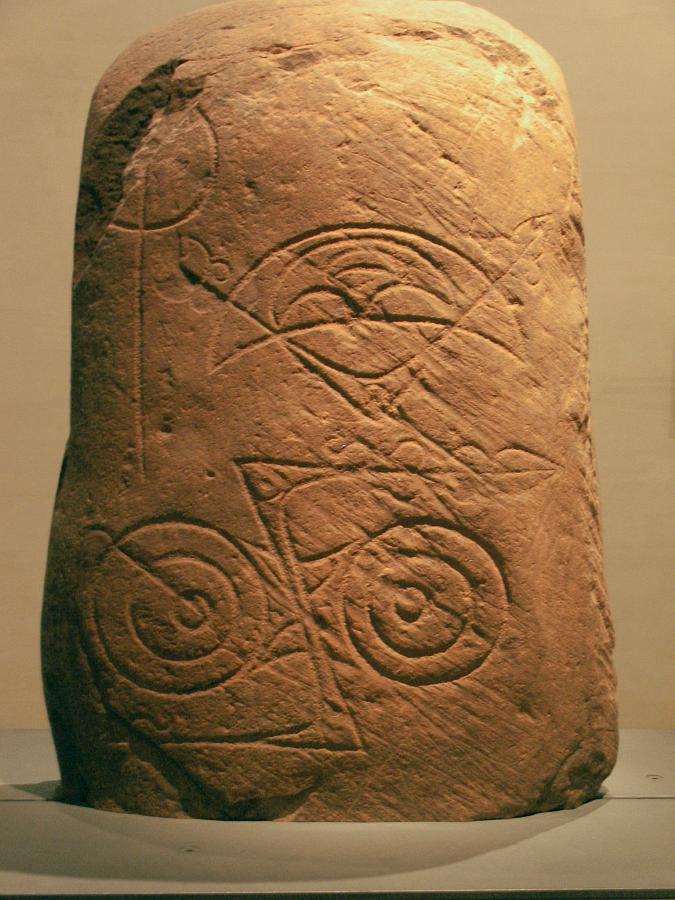
The purpose and meaning of the stones are only slightly understood, and the various theories proposed for the early Class I symbol stones, those that are considered to mostly pre-date the spread of Christianity to the Picts, are essentially speculative.
This Class 1 carved Pictish Stone is light red sandstone, 1.0 metre (3.3 ft) high, 0.8 metres (2.6 ft) wide and 0.15 metres (0.49 ft) deep. (GPS coordinates: 57.35450,-4.00110). It dates from sometime between 500 and 800. It is now housed in the National Museum of Scotland in Edinburgh.
Strathdearn Community Development Board commissioned a life-size replica of the stone from a local sculptor which will be displayed in Tomatin when a suitable site is found.