INDEX of Ann Glynne-Percy Essays
Nowadays one rarely meets true Wayfarers. Vehicles of all shapes and sizes have taken over, and contact with fellow Strathdearn dwellers can be just a friendly wave in passing, or squeezing onto the verge to allow for sight-seeing holiday folk. The Glen road is notorious for the latter, especially on Dalarossie Sundays, when minibuses full of eager bird watchers heading towards Coignafearn are a hazard, on the Kyllachy Brae in particular. Cyclists are seen more often, now that the old A9 is a designated trans-European route, and the Stores are a welcome halt to buy energy-giving fare before tacking the Slochd. It is just tiresome that the plastic empties are later strewn along the roadsides by the thoughtless!
A more recent kind of wayfarer is, or are, the stoic souls who travel the length of the country from Lands End to John O’Groats or vice versa, to raise money for charity. There seems to be no end to the ingenious means of transport they think up, even pushing a bedstead or bathtub: they deserve every hard-earned pound for their particular good cause.
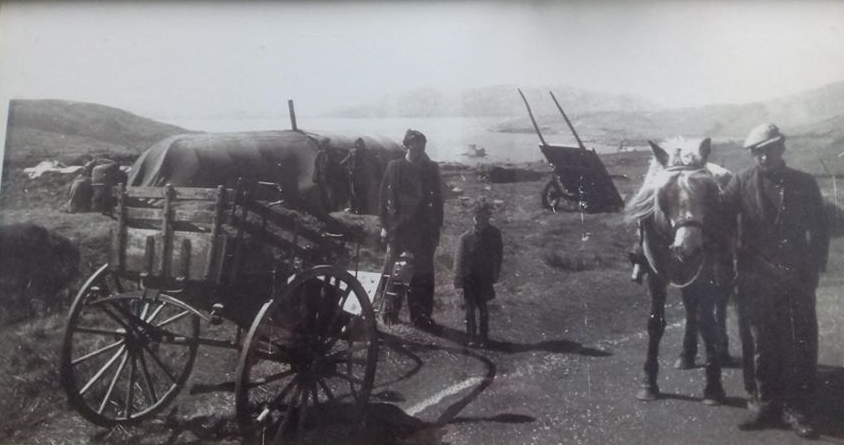
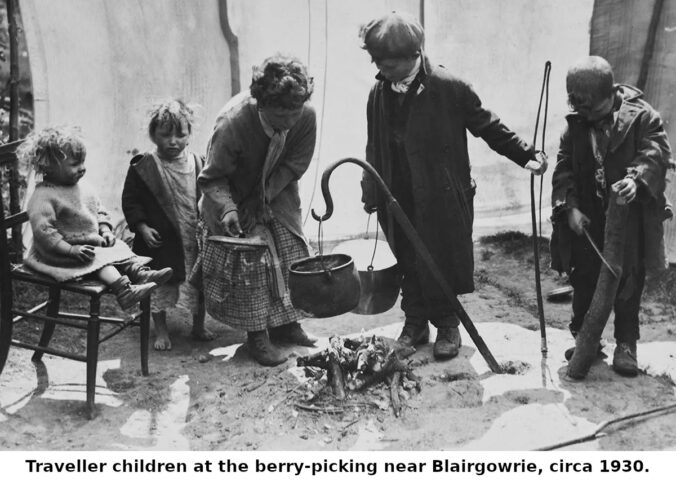
During the 1930’s I remember Wayfarers coming to the door, tinker families en route from the berry picking in Perthshire and Angus to the tatties on the Black Isle and further north. They had horse-drawn flatbed-type carts laden with all their goods and chattels, bundles and bairns, and lean dogs running alongside. They had an unofficial camp site at the end of the Cottage of Free road, where Alt Dubhag is now, but only stayed a short while to ply their trade around Tomatin. It seemed to be the womenfolk who went the rounds, mostly mothers with an infant in a plaid on her back. They sold home carved clothes pegs and other knicknacks, and were always glad of tea and sugar. We sometimes gave them outgrown pass-on clothes or shoes for the youngsters.
Tramps used to call too, old men with beards, battered headgear and usually a raincoat tied around he middle with twine and carrying all their worldly goods in a bundle. They sold nothing but hoped for a mug of tea and a jammy piece. It was said that they had a code, a way of letting their brethren know which homes were worth calling at – small heaps of stones or twisted grass nearby.
A very different Wayfarer was the French “Onion Johnnie” with his bicycle and strings of plump onions hanging from the handlebars. My mother always enjoyed his visit, both for his excellent produce and the chance to speak to him in his own language. The war put paid to his enterprise here but I wonder if a younger generation took over later, before supermarkets made the journey no longer worthwhile.
One sight to be seen occasionally on the main road was a man leading a well-groomed and handsome stallion – Shire horse or Clydesdale – calling at farms as required.
Bicycles were in everyday use before and during the War, as petrol rationing meant car journeys were a rare occasion – trips to Inverness were by bus or train. District Nurse would pedal her rounds in all weathers, even up the Glen, and another regular one met was Mrs Mowat the postlady. Several households had a horse and gig, and my pride and joy was my pony and trap – any excuse to go for messages that way, even if it took longer to catch and harness Rusty than go by bike, basket in front and milk can dangling.
To keep our wheels turning there was Mackenzie’s bicycle shop, for puncture repair kits and lamp batteries, and all manner of bits and pieces – not to mention the sweeties to be chosen with cunning to make one’s meagre ration last longer. The building was near where David Mackay’s home is now, and the Smithy was by Smithfield – essential for the many farms and hill ponies. How one misses them. The Smithy was later moved down to Coalhaugh, where there was more space for the machinery and tools awaiting repair.
In days gone by it was “Shanks Pony” for the schoolchildren attending Raigbeg or Dalarossie, or Tullochclury at Moy. They would carry their dinner piece – no canteen meals then – and most were probably eaten long before they reached their destination. One appreciative former pupil told me how Mrs Leslie, the then headteacher’s wife, used to make great jugs of cocoa to sustain the youngsters for their homeward trek – little would they imagine the school bus or taxi in the future.
My final thought is not so much of the Wayfarers themselves of past times, but the men who made their passage possible in wintertime, before the mechanised vehicles and snowblowers we take for granted now. The snow seemed to be deeper then, with huge drifts, which had to be hacked in blocks and thrown up over the edge of the cutting, often above head height until it was reduced enough for the horse-drawn snowplough to get through. Lorries with a front plough were used later, but backbreaking work with a shovel was still needed – how one prayed for a thawing wind and no emergencies.
Ann Glynne-Percy