by John Ferguson (Pedlar)
Index — Chapters: 1 — 2 — 3 — 4 — 5
Chapter One – The Beginning
I was born in 1940 in the time of World War Two, a part of my life that has always been a blank to me.
During that time, while my father was away fighting in the war, my two older siblings Robert and Muriel, my younger brother Alexander and I were left to fend for our selves in our house at 76 Grant Street, Charing Cross in Glasgow. My memories of that time are a blank to me but one can only imagine with horror what it must have been like for four abandoned children left by their mother, cold, hungry, alone in a dark house with bombs exploding all around.
It must have been the worst time in any child’s life, more so for a wee girl of six or seven as my sister was at the time trying to be brave for her brothers. I sometimes get a picture in my mind of children huddled together on a bed in a empty room with the room lighting up from the flash of bombs exploding, with rats scattering around shown up in the light created by the bombs. It is hard to distinguish between what would have been real and what was in my imagination at that time.
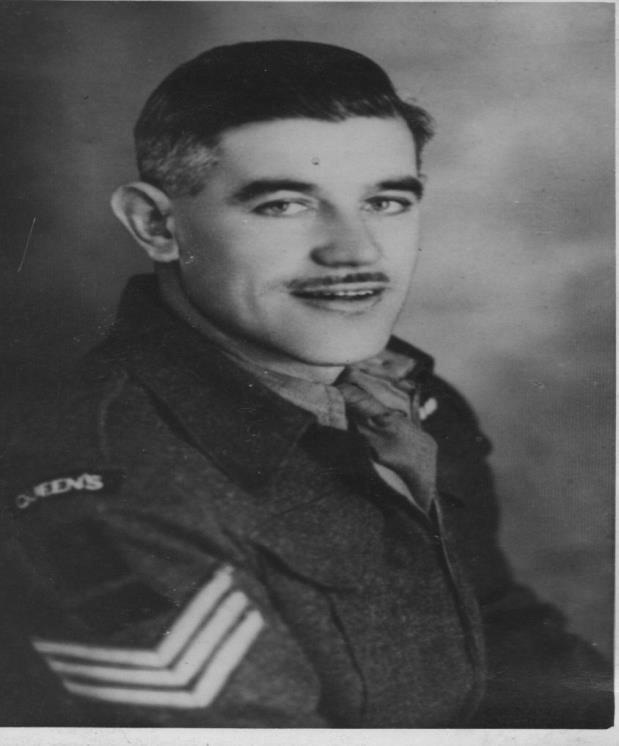
From there we were taken into care by the Glasgow Corporation and put into an orphanage, which I also have no recollection of, but it must have been tough for us all. Later on as I grew up I was told that as a child I was a tough wee lad and would let no one push me around. I was also told that as a child at meal times, when I was given a plate of food, I would eat all the moveable food on the plate giving the impression that I was afraid that someone would steal the food from my plate. So the best option was too eat it quick before it was stolen!
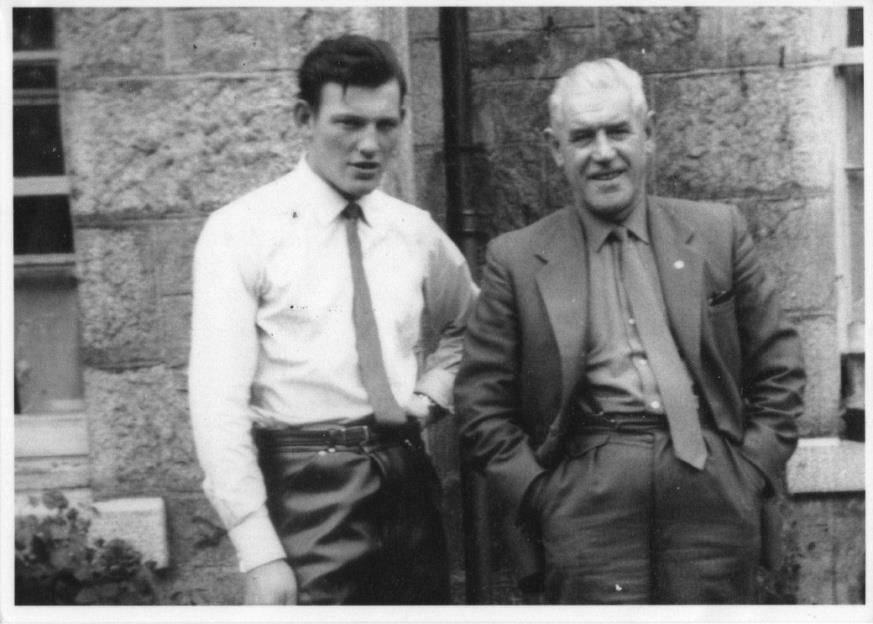
I was also told that I would hold on to my plate with my arm round it so that no one could take away my plate of food. This is all speculative as I am only going on what people told me and not on what I can remember.
One thing I do remember though is when I was very young, about five or six, we were up the hill in Tomatin around the Colonel’s grave when a Spitfire came in low through the valley. The other kids stood and waved at it, while I ran screaming and hid. Needless to say I had to endure a lot of bullying over this although at the time I could not explain why. Later it became clear that this went back to when I lived in Glasgow during the war and the sound of an aeroplane meant danger.
From the orphanage we were sent as a family to live in the country, again this is another ‘blank’ time in my life that does not register in my mind, but from what my sister tells me we had one of the happiest times of our short lives together as a family, that was until the woman that we were sent to live with fell pregnant after a few months and could no longer look after us. The Glasgow Corporation had to re-house us which resulted in us being separated from each other. It was to be the last time I was ever to see my youngest brother. As for my older brother and sister, it would not be until I was into my twenties that we would meet again.
To re-house a family of four is not an easy thing to do, so when we were re-housed for a second time, we were all sent to different locations. I was the lucky one thanks to the sister of the woman we were originally sent to as a family. She thought that I would make a good playmate for their son who was only a year older than me and so I was chosen to go and live with their family in Tomatin. When you think about it, it was like going to a kennels and picking a pup. However, it turned out to be the best thing that ever happened to me as I went on to have a wonderful life, perhaps the type of life which my brothers and sister must have often dreamt about.
My sister Muriel was sent to a farm somewhere near Peterhead where she was treated no better than a slave. She had to get up at six o’clock every morning to feed hens and do all other sort of work before going to school. Then she would have to return at lunch time as the folk who kept her wouldn’t pay for her lunch at the school. Before she could eat herself she had to make the lunch for the farmer and his partner. She later suffered the terrible ordeal of being physically and sexually assaulted from the time she was about ten by the farmer with the help of his partner. She was always dressed in rags having to wear hand-me-downs from locals who took pity on her. Not like me as I was about the best dressed pupil at school because twice a year the Glasgow Corporation would send a box of all the clothes that I would need for summer and winter.
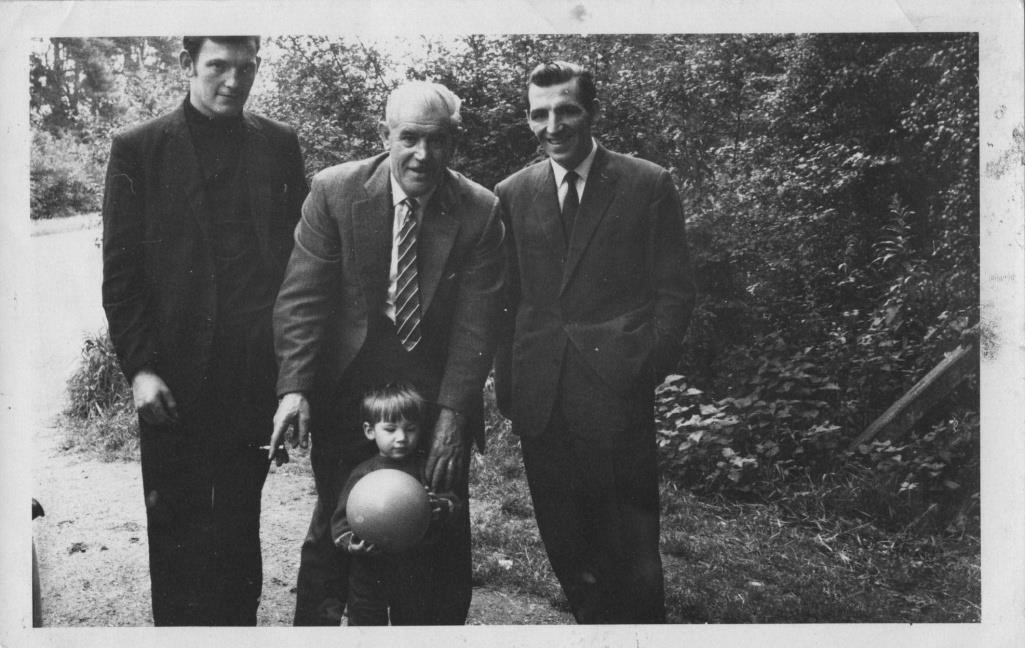
This came about because the family that I lived with chose to take the clothes for me instead of money and clothing coupons, unlike the people that Muriel was sent to. Instead they used the money and coupons on themselves and she was warned that she would be killed if she ever told anyone what happened to her on the farm. It was only recently on her 70th birthday that my sister told me this, such was her adult emotion. Robert and Alex had an equally hard time. Alex was such a renegade, he kept running away and had to be returned to the orphanage – this was the last that anyone in the family ever heard of him. On the death of our father in 1983 Alex could not be traced and even the Glasgow High Court could not trace his whereabouts.
It was by a strange twist of fate that I found out the whereabouts of my sister Muriel. Sometime in the 1960’s Billy Gall, a friend from Tomatin who was a year or two older than me, left Tomatin to do his national service in the R.A.F. After his initial training he was posted to Boddam, outside Peterhead where he was posted to work in the staff office. Working alongside him was as a civilian called Mike Esson. They got talking to each other about where they came from and when Billy said that he came from a little place outside Inverness called Tomatin, Mike said that his wife thought that her brother lived there. Billy asked what her brother’s name was as he knew all the folk that lived in Tomatin. When Mike said ‘John Ferguson’ Billy told him there was no one of that name in Tomatin but said he would ask his mother the next time he wrote home. When he wrote home to his mother and told her about Mike and what he had said she wrote back saying “you silly bugger, that’s ‘Pedlar” which was my nickname and that we’d gone to the same school although not in the same class. The reason for the nick-name ‘Pedlar’ was that when I first came to Tomatin there was a song that was all the rage at that time which I went about singing all the time. The song was called Johnny Pedlar so at first I was called Johnny Pedlar then the Johnny was dropped to become just Pedlar which has stuck ever since!
I then got in touch with Muriel and was able to go and have my next holiday in Peterhead with her and my new found family. Through Muriel I was able to get in touch with my father who I then invited to my wedding to June in 1965 resulting in June and I going down to Glasgow for a holiday with him where we were taken to meet my oldest brother Robert who was a fireman with the Glasgow Fire Service. Another coincidence happened when I was visiting Robert. There was a chap sitting with his feet up on the veranda of the flat next door who I thought I recognized. After a while I asked Robert if his neighbour was a chap called Sandy Dignan who was a Carrbridge lad that I had known for years from going to the dances around Strathspey and through meeting him when he came home on leave. All that time I didn’t know that he was my brother’s next door neighbour.
However, back to my childhood! The family that I was brought up with and later I was to call my Mother and Father and Brother and Sister. Sattie and Duncan Macrae and their children Alastair and Kathleen provided me with a wonderful life.
My first memory of this new life was of going to school at Raigbeg in Tomatin which was three miles from the Station Cottages. All the children of the district had to walk to school, regardless of the distance. There was no such thing as school transport in those days. Cars were something of a novelty, there was only a handful of them in the whole village. Mr Leslie, the head school teacher, was one of the few who had a car which was a baby Austin and the first letters were RG with four numbers after them.
When Jacky Noble with his new wife Molly came back to live in Tomatin, she had a novel way of taking their son David to school from Balmore. As it was a long lonely road and no other children went to school from where they lived she reinforced a pushchair and wheeled him to school. David became known as ‘Digger’ (a name that he chose himself. I think that it was after a rolling cigarette tobacco) and as he had to inspect everything that he saw on the roadside and would have taken ages to walk all the way to school. So to wheel him in the pushchair was the quickest way to get him there!
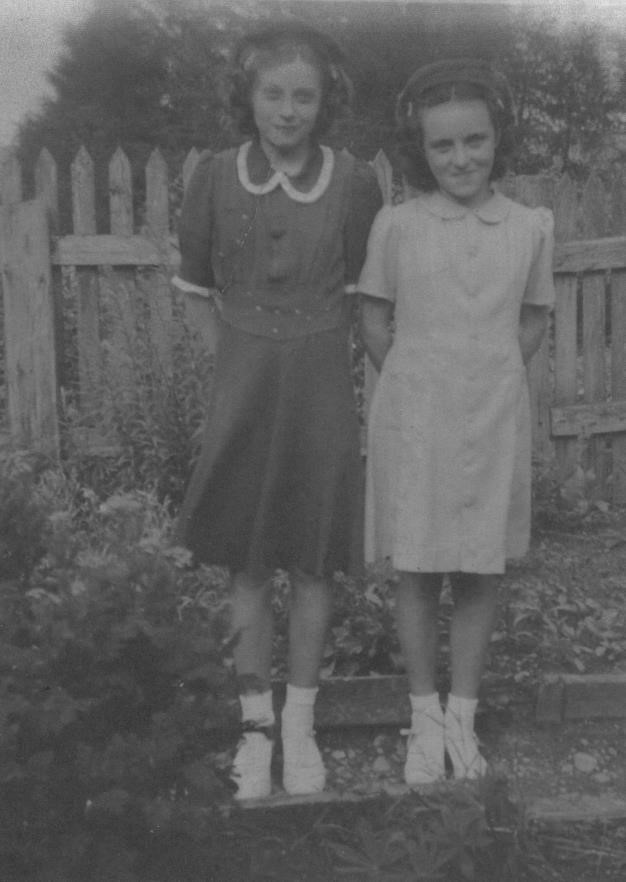
By the time I had reached the age of nine, milk had been given daily to school children. This was delivered by bus and left at the local shop which was about two miles from the school. From there the children would have to take the milk to school by wheel barrow in the summer and by sledge in the winter. They would have to take the empty milk bottles back to the shop on their way home from school and they could not use ‘taking the milk’ as an excuse for being late for school.
The teacher that was at Raigbeg School when I started my education was a young primary teacher by the name of Miss Yorston. She was the best teacher or maybe I should say the only one that I ever got on with. She lodged at Morile Farm with the Henderson family and was engaged to their son Edwin. They later split up one night outside the shop and I remember it was quite a heated argument that ended with her throwing the ring at him. In return he told her to keep it as it only came out of Woolie’s!
The primary class room had about eighteen desks made up of three different age groups. The first year class had sliding wooden colour counting beads of different colours on the desks. This was where the children learned to count, add and subtract. Also we had slates and slate pencils as slate was a cheap material to learn to write on and it could be wiped clean ready to start again. The only thing about the slate pencil was that it made a squeaking noise as you wrote.
In the third year we had copy books that we had to learn to write on in ink. It wasn’t as easy as it seemed as all you had was a piece of wood like a pencil with a nib holder at one end into which a cheap nib slotted. This was then dipped into an inkwell of watery ink and then you started to write. The procedure was up heavy and down light. You would be getting on fine then the pen would stick on the paper and a big blob would spoil the lot! The paper wasn’t so refined just after the war as sometimes you could see minute parts of wood in the paper. The primary class room was separated from the big class by a sliding glass panelled wall which could be slid back. If for some reason one of the teachers was missing the other could teach both classes at the same time. The total number of pupils for both classes was thirty-eight and this number was hung on a cardboard notice on the wall.
The head teacher was a Mr Leslie [Scotty]. He was fair teacher but very strict and was well respected by all. He did a lot of work after school hours and there wasn’t a committee that he or his wife did not serve on. Scotty was a stalwart of the community and as head master considered it a part of his duty, to be card master at whist drives and chairman at concerts, never refusing any unpaid task asked of him. The only time I ever saw him in a rage was one time when the big boys went off with his cane, led by George Buchan they threw it in the river! Thankfully for them there was not a lot of water in the river and it got stuck on the bank a little downstream, where they found it when they were sent out to look for it. Needless to say that they took the whole afternoon to find it before returning it to Scotty only to feel it across their backside for their trouble.
The cane was of bamboo with a pin in the end of it, this was used to jab pupils in the backside with if they bent over to speak to the person behind. If you were not paying attention the cane would come crashing down on the desk top putting the fear of death into all, even the children in the primary end jumped at the sound of it.
Mr Leslie was very fond of taking all the school children on a nature walk if it was a nice day which was great fun for us all. Sadly he retired before I went into the big room and he was replaced by a Mr McCuish who was a strict ‘Wee Free’ and unless you were of that religion or in the upper class of the community he had little time for anyone else – especially me as I suffered from a form of dyslexia when I was at school. I still do, for when I am writing I will miss out words and misspell. (I am writing this with the help of my wife and a dictionary). Instead of trying to help he just seemed to take great pleasure in ridiculing me in front of the class even trying to read out to the class anything that I wrote by exaggerating the miss-spellings that I wrote, resulting in me rebelling against school even more.
I had one other enemy at school, and that was Lennox Latham. He was a bit of a bully and much the same age as me and tough as hell. As I said earlier I was also just as tough and would not give in to him and the result was that on many a night after school I often came home covered in blood from the many fights that we had. Later we became good friends and I suppose it was more to do with mutual respect for each other in the end.
There was one time Lenny’s father gave the family two ponies. However Old Jock was not one to make things easy for his children therefore the ponies were not broken in for riding. It was a great time to go over to the distillery where the family lived, in the evenings after school where we would try to ride the ponies bare back. The fun Lenny and I had trying to see who could stay the longest on the ponies back, and to hear old Jock laugh when one of us got thrown to the ground as we always did for the ponies always won. I actually think that the ponies enjoyed the fun of it all for when they threw us to the ground they stood and waited until we got back on, before they would start bucking all over again.
Although I got on well with all the children, I much preferred to be on my own, going hunting rabbits, apart from snaring rabbits which was legal in the 40s and 50s. I had a technique for digging rabbits out of their burrows. This way it enabled me to catch rabbits to eat but if I saw a coloured one go down a burrow I could take it alive. The way I did it was with two sticks, one was a long one the other was short and stout with a point. The long one was put down the hole to find the direction that the hole was going it was then placed along the top of the ground in the direction that the hole went, then at the end of the long stick a hole was dug down into the burrow with the pointed stick. This was repeated until I came to the end of the burrow where I could put my arm in and catch the rabbit. If it was a black or white or even two- tone it was taken home and put into one of my hutches to become one of my many pets. I know that there are those today that may think I was a cruel wee lad but they could not be more wrong for we learned in the country to respect all living things and we would not kill a bird or animal, except to eat.
When later I worked on the farm harrowing and rolling the land ready for planting crops, I would stop the horse and later the tractor, to shift a lapwing or an oyster catcher nest and then to put it back once I had passed it. In the 1950’s there could be as many as twenty or thirty nests in one five acre field. The nests were marked with a small cairn of stones to be seen easily the next time the ground had to be worked.
Another hobby as a child was bird nesting. Tomatin was a great place for birds and there were so many different birds. It was an exciting hobby spending hours watching and trying to find their nests then climbing the tree to get at the nest. Also the different places to look for them, as many a nest I found in some of the strangest places. Back in the days of house dumps a common place to find a Wren’s nest would be built inside an old tin can. The way it lined the tin with moss, leaving a hole no thicker than a man’s finger, was amazing. Another bird that built its nest in the rubbish dump was the Robin. I have seen them nest in an old kettle, tins, cans or anything that they could build a nest in. There was something about a dump that birds loved. It may have been the grubs and flies that were found there but whatever it was, the birds loved the place.
Most homes back in the days before ‘environmental friendly’ was ever heard of had what was known as a midden or dump, which was a magnet for all the kids. The girls would look for bits of crockery and anything that they could use for their imaginary house. The boys would be on the look-out for old prams to make soap-box carts also bits of push- bikes which were used to repair their own bikes. Most boys never had a new bike but made their bikes up from old bits found in dumps and by the time they were eleven or twelve they could strip a bicycle down and put it back together again, they could sort a puncture and do anything that was needed to keep their bike on the road.
There are those who will say that it was because of the hobby of bird’s egg collectors that the decline in bird numbers has come about. This isn’t true as school boy collectors did no harm, they only took one egg and only then, if there were three or less in the nest which was an indication that the eggs were fresh and easy to be blown. The eggs would be replaced as the bird would lay more eggs until she had her clutch. We boys would never tell anyone where the bird’s nests were so that they would have a better collection than their mates. My favourite bird and one that I will always remember with fondness is the Yellow Hammer. It was always the first bird to greet me when I started my adventures down the Station road, as it sat on the telephone wires singing its call for a little bit of bread without any cheese. Sadly they are no longer seen or heard.
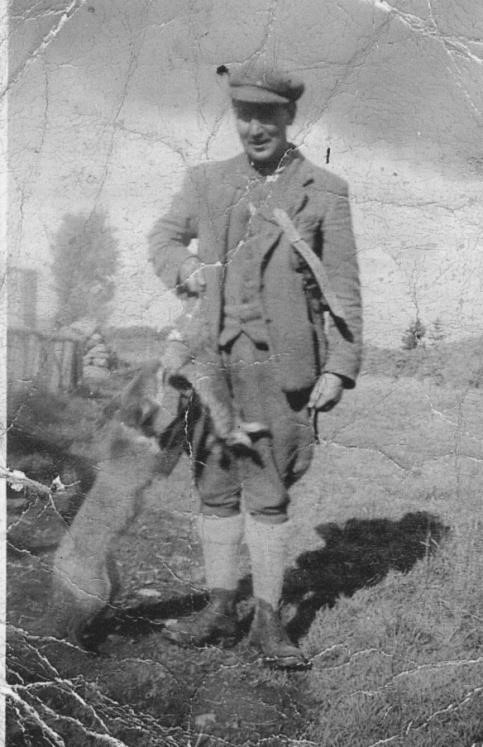
Most folk in the country had a great respect for the wild life that lived around them, even gamekeepers have that mutual respect for nature as it’s their job to look after the game in their charge. If that meant killing some vermin to protect their game birds then it was done as quickly as possible and as humanely as was in their power.
I remember Uncle Ian, my foster mother’s brother who was a gamekeeper at Cawdor having a pet fox which he rescued when his terrier took it out alive from a den. As it grew older he kept it chained to a kennel when he was away from home and giving it the run of the house at other times. As it grew older his wife noticed that some of her hens were going missing. Ian said that it could not be the fox as it was never off the chain when he was not there. So a watch was kept on the fox and pretty soon it was discovered what was happening to the hens. After feeding the fox with some porridge and milk the fox pushed the dish to within a yard of the end of the chain then went back into the kennel and waited. The hens all came to feed on the dish of porridge and as they were feeding it pounced, taking the hen it caught, back into the kennel to eat. The fox therefore had to go. Luckily for the fox Ian had a friend that was keen to have it and as they did not have hens it was the ideal place for it to spend a long and happy life living as a house dog.
Porridge and milk was the main meal for dogs, hens and humans, because both were so cheap and plentiful. Most farms had a milking cow which supplied the house milk and, this would be turned into butter, cheese and crowdie or left to go sour for making scones. The thought of making use of skimmed milk for anything other than feeding to pigs was unheard of. To give it to a human to drink was unthinkable!
A healthy child was one with rosy cheeks that was outside in all weathers and who seldom caught a cold – all from drinking full cream milk. I stopped drinking milk when they started to pasteurise the milk. When you think of the goodness that is in whole milk and how no animal can live without getting the first milk from its mother which is full of antibodies to keep their young healthy. Buy any food from a supermarket then read what you are about to eat and it is frightening. Is it little wonder that people contract so much illness with all the preservatives that are in the food that we buy. Milk for instance today will not go sour it just goes rotten.
In the early forties and the fifties there was what was called the travelling thrashing mill. This was a mill that at the start was driven and hauled around the farms and crofts by steam-engine . Then, as tractors became more popular, they became the work-horse for the mill that went around the farms and crofts to strip the corn from the straw the oats would be turned into feed for themselves, and their animals, the straw would be used as bedding for the animals and to fill their straw mattress. This would take place every October and November after the harvest was gathered.
This was also at a time when sheep were being fattened up for the sales. At that time there was a sheep illness that was called ‘braxy’ which affected only fat sheep. Thankfully there is now a vaccine that has wiped this out. Although the diseased sheep died many of the crofters could not afford to bury them and they would take carcass home and skin them to eat. The meat was not poisonous but as many of the sheep died through the night they were not bled which created a strong smell when the meat was cooked and also acted as a strong laxative to those who were not use to eating this meat. It was this meat that was often served at lunch time at a croft thrashing mill and the smell met the workers whenever they reached the door at lunch time.
Another meal that was served at the mill was rabbit. I remember my ‘Father’ was often asked to help at the thrashings in exchange for a bag of corn seconds for his hens. When ‘Mother’ asked him what he had for dinner (lunch to the English) he said that it was rabbit and that he had two back legs with spats on, this turned out to be the leg that had been jointed and the skin cut above the joint leaving a circle of skin and fur on the leg. Another meal that was a favourite with crofters was sheep’s head which was made into a broth. This would have a film of fat floating on the top of it and if the grace was too long and the soup started to cool it could have a white skin of cold fat around the plate edge before the soup was finished. Along with pig’s trotters, potted head, tongue and many other cuts of meat that were served up in days gone by, all free of any additives which are found in all bought food today.
My greatest passion as a child was fishing. I was always fishing whenever I could. Fishing is still my hobby but as a child, fishing was the most exciting thing to do and also provide a tasty dish. The burns all around Tomatin were full of wild brown trout along with the river Findhorn which fished best when they were in spate. To go fishing in a Scottish burn started in the backend of the year when I would go to the hazel wood and cut a good long sapling with a good switch in it (the old shepherds crook-makers reckoned that the best time to cut a hazel was when the moon was full in November). This sapling rod was left to dry over the winter. The next thing was to buy a six penny (2.5 new pence) card of brown fishing line which was then tied and wound round the top of my hazel rod. The most important part of the tackle was the penny hook which I was told had to be soaked in warm tea to remove the kinks and stain the cast.
Come the summer I was all ready to start. Going to school after the start of the new season I would watch the shop burn for any sign of fresh water. Then if the burn was in spate, I would run all the way home after school, gulping down my tea and then dashing off to have my first go of the new fishing season. The shop burn was where I fished most because it was the nearest to home. With a tin of worms in my bag off I would go. Nobody worried about you, you were just told to be back for supper. There was no worry about child molesting or any other fear for your wellbeing. Only a slight worry that you, as a boy of eight plus, might fall in the water but the sense of freedom that you got was beyond belief. To be the great white hunter with his faithful dog at his side was every boy’s dream. Dropping the worm into the fast flowing stream and letting it float under the bank and feeling the sudden shake as the fish takes and then shoots upstream.
A quick jerk and the fish was on the bank. Sometimes the fish would come off the hook and then the dog and I would search the long grass for the fish. The most that I had in one day was 87, all fish worth keeping. That was in the Drumbain burn which was the best burn of the lot and the fish were much larger for the first mile from the river Findhorn up the burn but as you got up near the Slochd where the burn got narrow sometimes going out of sight as the banks became one, leaving little openings where the worm was dropped in to flow under the bank and to pull out a much thinner and very dark trout .
There were lots of burns that feed the river Findhorn and all fished differently. Some had few trout but were much bigger, like the Distillery burn which could have wild trout up to two pounds in weight but only up to the Distillery dam and after that they were small and black. From the Distillery down the burn there would sometimes have white froth floating down it when the burnt ale from the distillery was discharged down the burn. This left a white hairy mould that was a breeding place for all sort of bugs which the trout fed on. This made them hard to catch except by fly as they were so well fed. The Balvraid burn on the other hand was one which you had to go above the farm to the rough water where deep holes were created by the water as it flowed over the rocks from the loch, high in the hills. It was only once that I fished the Balvraid Loch or to give it it’s proper name Loch Braigh Bhrothaich. The ‘Bhrothaich’ is the proper name of the burn also. When I fished the loch it was with Duncan MacLeod and we only got a few small trout but as we took nothing to eat we built a fire and cooked them before we set off for home.
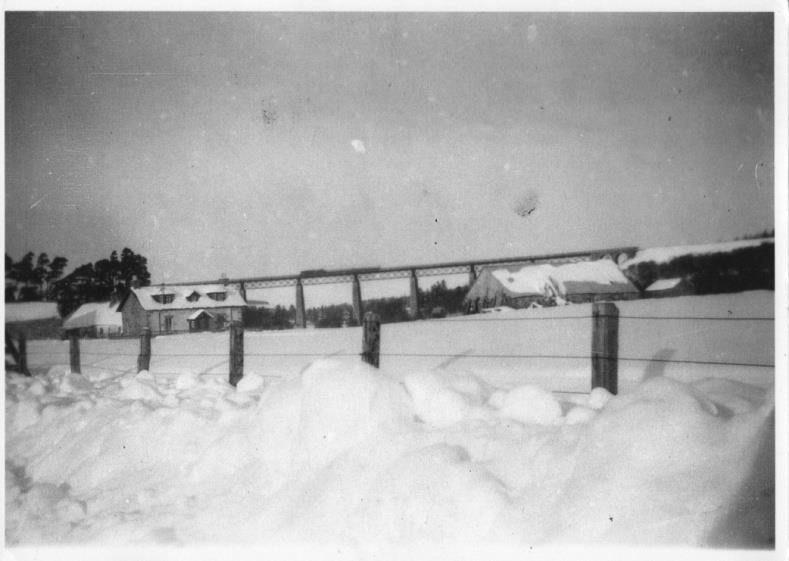
The River Findhorn was also good for brown trout and the bit between the concrete bridge at Bridge-end and the railway viaduct was given to the locals to fish for free by the Laird of Kyllachy, Mrs Boyd. I was not allowed to go the river until I was in my ‘teens’ as the river was well known for its flash floods and the danger that this held.
The only time that I had any bad memory of my stay in Tomatin was when I was fifteen and about to leave school representatives of the Glasgow Corporation came to Tomatin to discuss my future. They were two important looking men in suits who asked my mother if I was good at anything that I could be helped further with my future education. When mother said that I was good at art, drawing and painting they said to her to get the silly idea out of the boy’s head as there were too many pavement artist in the country. This was said in front of me which was not a lot of encouragement when you are about to start out in life!
That is how I came to be living in that wonderful place called Tomatin and now I would like to take you on a trip around what became my home village.