By John Ferguson (Pedlar)
Index — Chapters: 1 — 2 — 3 — 4 — 5
Chapter Two – Tomatin
- The Station
- Station Road
- Back Station Road and the Distillery
- Free Farm Road and the Freeburn Hotel
- Old A9 – Freeburn to the Shop
- Shop Brae
- Inverbrough, Balvraid and Corrybrough
- Raigbeg and Soilshan
The Station
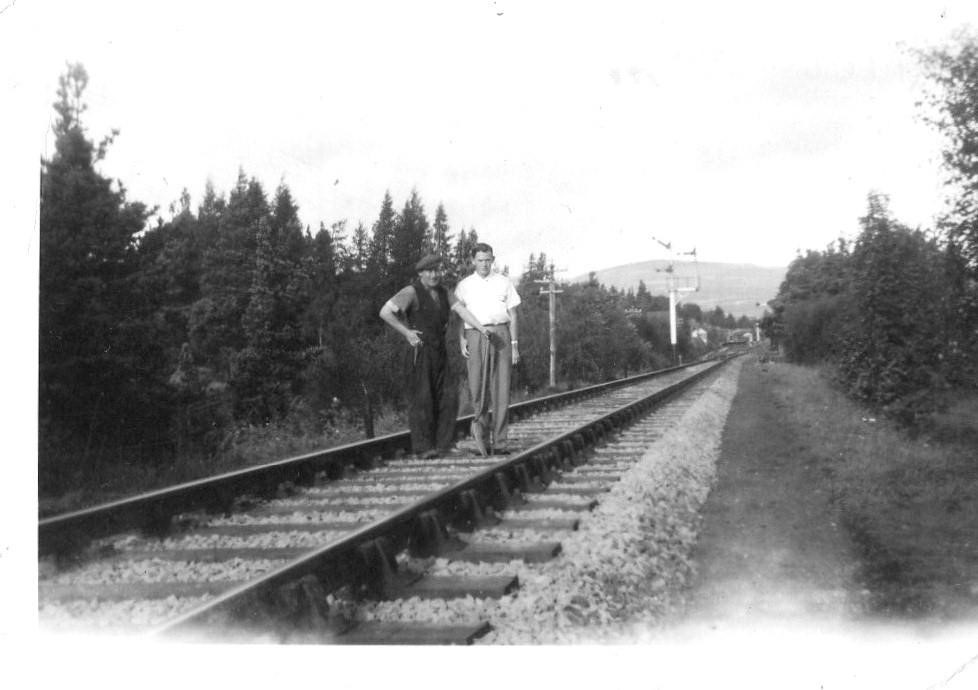
In the late 1940’s and early 50’s the station road in Tomatin was a magical place for any young boy to grow up in, and I was one of those lucky lads. The Station from which the road takes its name, was a hive of activity and a magnet for the young lads of the district with its brown and yellow wooden building and the silver footbridge crossing from one platform to the other. It was here that we would rush to wait for the steam engines to pass under and shroud us in a cloud of smoke and steam as they thundered by below on their way to faraway places. When, in the world of the twenty first century and of man going to the moon, the world is a very small place, but back in the 1940’s Inverness, which was only 16 miles away, seemed very far away to us. As children we would go once a year on the Sunday school trip to Nairn beach.
This was an exciting time for us all and it would take over two hours to get to the beach. As you went on the bus each child was given a paper bag with some sandwiches, a cream bun, a cake and some biscuits – all in the one bag and we also got a bottle of pop. By the time the bus got to Nairn the whole lot would be all mixed together. I also remember as a small boy in the 50’s being told to stop reading or more looking at the pictures in the Eagle and Victor comics because it filled my head with silly ideas about people going to the moon and that this would never happen. Yet here we are, living in a time when people are now going to the moon and even living for months at a time in space.
Back in the 1940’s railway steam engines could not go far without water, therefore at the end of each platform was a water column with a large canvas hose where the engines took on water. Between the railway platform and the station road at Tomatin were where the goods sidings were. This was where Tommy Fraser’s household coal was bagged and loaded into his chocolate coloured Bedford lorry, ready for sale around the village. Also wagons of barley and malt for the Distillery were unloaded at this siding. Tommy and Bill Kelly had the contract to cart it around to the distillery in their motor lorries. Bill’s lorry was a green Austin.
The empty whisky barrels and coal for the distillery went in and out by the siding on the other side of the main line which was by the ‘banging’ gate. This gate was worked by weights and pulleys and could be very frightening on a dark night when the gate would shut with a bang behind you which seemed to bang a long time after one had passed through it, giving the impression that someone was following behind. This was also a short cut that the men used to go back and fore to work at the Distillery. From here the wagons were taken on to the Distillery by a ‘Puggie’, a small petrol driven engine that pulled the wagons into the distillery. The coal would then be shovelled from the wagon by hand into a horse pulled cart to be taken into the still and boiler house which were at that time fired by coal.
The work was hard as the Stillman had to watch that the stills did not boil over. This was done by pulling a cord with a wooden ball half way up the still. When the cord was pulled and the ball swung onto the still, if it sounded with a dull thud which would indicate that the still was boiling too hard, then the fire had to be reduced to bring the still to a simmer, it then had to remain at this temperature until all the spirit was extracted. A horse and cart was the only way to take the coal into the still room as there was no other way to negotiate the tight turns within the buildings.
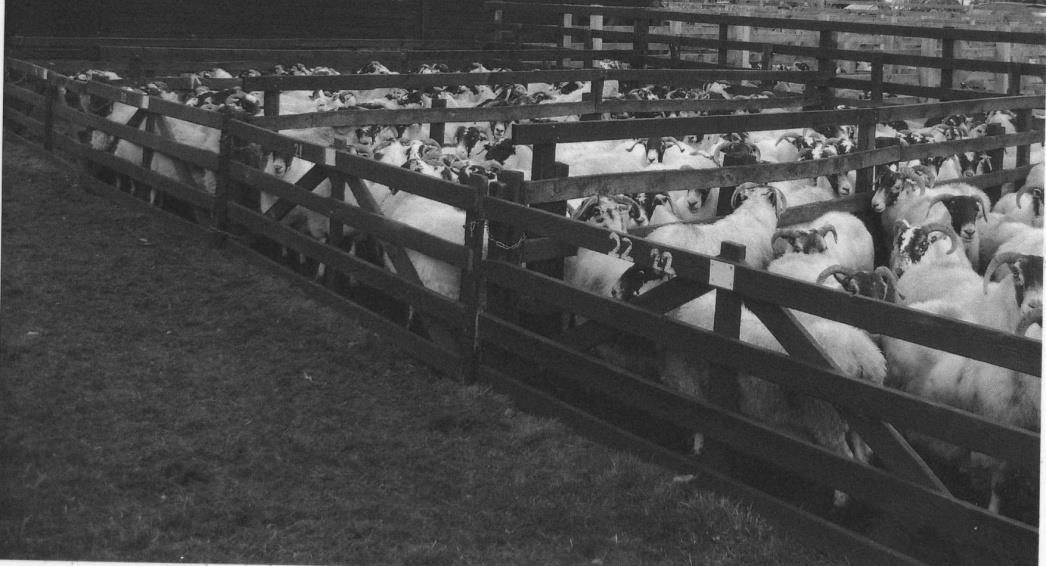
Besides incoming goods there were also out-going goods from this busy little railway station. Wood from the local sawmill, with one of the biggest consignment of wood in those days were pit props for the coal mines. Livestock and also whisky were just some goods that left this busy railway station. The livestock were mainly sheep that were sent south for the winter. It was quite a sight to see two or three hundred sheep being walked to the rail siding and loaded onto slatted wagons. The sheep were taken on to their winter grazing and returned again in the spring. When they got to the station the sheep were penned in a pen made up with self-standing wooden gates. These were gates with heavy cross-angle legs which allowed them to stand on their own then built into any size of pen that was required. They were then sorted out by the farmers and shepherds into their own lots of sheep before loading them into the wagons.
Another thing that the goods sidings were used for was when a wagon wheel overheated. The wagon had to be put into the nearest siding until they were fixed. It was quite a sight to see a wheel glowing red often with flames coming from the wheel as it sped along, even more so on a dark night. The reason that this happened was that above each wheel bearing was a metal box which was filled with wadding and thick oil. If the oil was not topped up the dry wadding caught fire. The wagon then had to be taken off at the nearest siding until the bearing was fixed. If this was not taken off the line there was a danger of the wagon derailing and taking the whole train with it.
One such wagon was a 20 ton load of Kessock herring. These beautiful little fish which were caught in their hundreds of tons back in the 1950’s out in the Moray Firth and then landed at the Kessock harbour in Inverness which gave them their name. The news soon spread through the Strath that a load of herring was in Tomatin siding. They came from far and wide and from all walks of life – farmers, forestry workers, old folk and children. From up the glen and as far as Moy people came with prams, baths, pails and anything that they could carry the ‘silver darlings’ home in. That winter the main diet in Strathdearn was salt herring! There was no thought about healthy eating as it was a case of anything that would provide a meal was all that mattered. When you had a meal of salt herring the sweat would be running from your face. The way they were cooked was to boil them on top of the potatoes to draw some of the salt from the herring but first they were put in to a colander and left under the water spout at the spring to wash the salt away and although it never did it completely, it did help a little. Salt herring were so flavoured that some families had what was known as ‘tatties and point’. This was when a salt herring was cooked with the potatoes. The herring was then put on a plate and the family would then take a tattie (potato) on their fork and rub it on the herring to get the flavour. Thus one herring fed a whole family.
The station buildings consisted of toilets, waiting-rooms and the ticket office which was also the signal box. The waiting rooms were never locked and were spotlessly clean and they were often used by local couples as a lovers retreat on many a cold and wet night. The youth in those days showed a great respect for others property no vandalism or graffiti was caused and they always left the place as they got it, so clean that no one would know they had been there.
The main office was where we young lads spent many a winter night. There was always a big coal fire and we sometimes took a slice of bread in our pocket when we went there some nights to make toast on the glowing embers of the open fire. Toast never tasted so good as it did then, the thick slices of bread that were so soft and in the middle and crisp on the outside. In the middle of the floor there was a big high desk with a high stool, where a ledger, was open with all the train movements were recorded on.
Also in the office were the levers that operated the points and signals plus two tablet machines – the red one was for the ‘down’ train and the green for the ‘up’ train. How they worked was when a train left Daviot, Moy would send a belled message, a sort of Morse code by the green box. Tomatin would reply if the line was clear, a metal disc would be released from a similar machine at Moy which was put into a leather pouch attached to a leather ring. Tomatin would then ring Slochd on the red box releasing a large metal key which was put into a similar pouch at Moy. The signals were then set at green indicating that the line was clear for the train to go through and as the train passed through the platforms the engine fireman and the Station signalman would exchange hoops. The disc from Moy was then put into a drawer at the base of the green box and the signalman would then bell Moy that the train had passed safely through Tomatin. The drawer could then be shut and not be able to be opened until the next train was cleared to go through.
One of the highlights for us was when a ‘double-header’ was used to pull a loaded train up to the Slochd summit. The front engine was then unhitched at the Slochd to begin the return journey to Inverness. As there was no turn table at the Slochd the engine had to be run backwards for the entire return journey. If we were friendly with the engine driver we would sometime get a lift on the footplate up to the Slochd in the engine then back to Tomatin.
The thrill of riding on the footplate is one of the most exciting experiences that anyone can have. The noise and hiss of steam, the heat of the fire when the firebox door was open and the movement of the footplate as the engine rolled down the line with the wind battering ones face is a thrill that I can still remember sixty years on.
Station Road
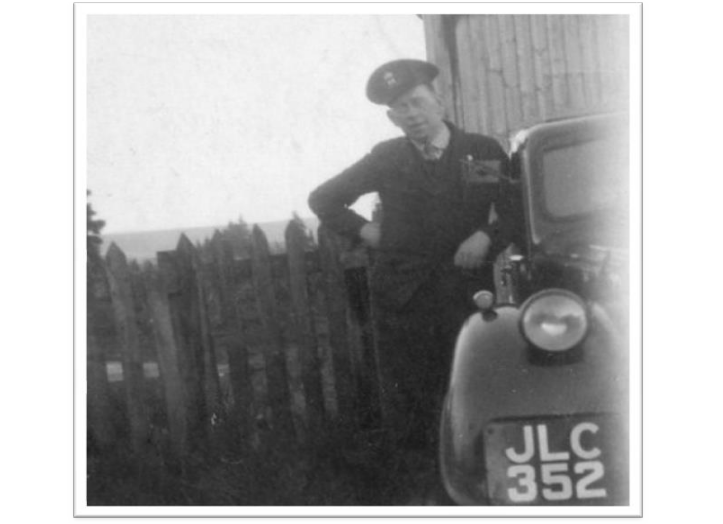
At the back of the station buildings was a large car park, which was tarred along with the Station road in 1952 or 1953. This then became our bicycle race track and we had a lot of fun racing round it and up by the goods yard then back round the opposite way. This was all the more exciting when it was done in the dark without lights. At the bottom of the car park was the Royal Mail garage and next to that was a large building known as the Stores. At one end lived the Cameron family and next door were the shoemakers, later to be the home of the Mackintosh family who came to live there.
I think that Mr MacKintosh came to work at the Sawmill and their son Donnie was a friend. When the family went to live in Inverness he and Alistair, my ‘brother’, stayed lifelong friends until Alistair’s sudden and early death. Alistair started work in the Distillery cooperage and later went on to take over the running of the Freeburn petrol pumps with his wife Jean. They were well liked and did a good job of running the pumps but sadly the big supermarkets forced the pumps to close by dropping the price of petrol to a price that they could not compete with.
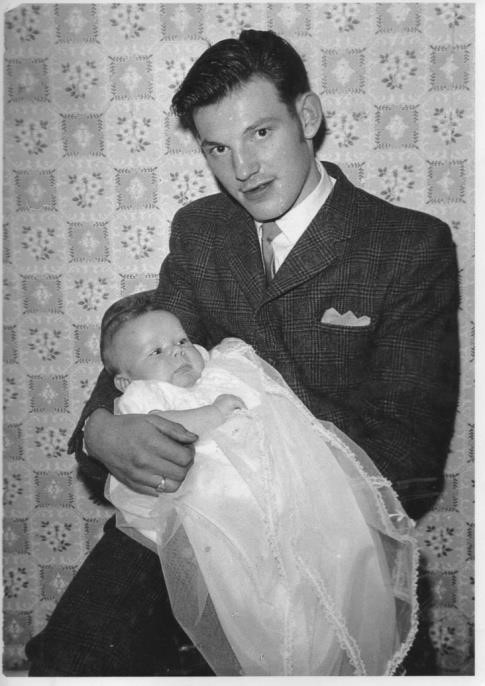
Alistair’s hobby was making models of aeroplanes out of wood, a craft that he showed at many craft exhibitions. With his death died one of the few remaining true Tomatin stalwarts and he will be remembered for a long time.
Across the road from the stores was the curling rink which was a very popular winter sport in Tomatin before the Second World War. Although I never saw curling on the rink it was still quite clear where it was, as it was well constructed with wooden surrounds and wooden sluice. It finally became overgrown with trees and rushes through not being used which was such a shame that a way of life should be lost forever. When I look back the winters seem to have been much more severe both in frost and snow which made winter sports more accessible. Another sport that was prominent before the war was Shinty and there was even a Strathdearn Cup which I think is still played for today.
About two or three hundred yards down the road on the right was a wooden cottage where first the Ross family lived. Most of the men folk were either train drivers or firemen on the railway (that is they filled and stoked the fire on the engine of the train). After them came the Nicholson family which was quite a big family. I cannot remember the names of them all except that Kathy worked in the shop and Andy worked on the Distillery farm at the Freeburn until he went into the army to do his National Service. I then got his job and started work as cattle-man on 1st January, 1956 at the age of 15 years.
The next building on the right was the saw mill and yard. Across the road were some wooden huts where the saw miller and the workers stayed and there was also a nissen hut where the McGillivray family lived. It was very cold but once they lined it with wood and two wood-burning pot belly stoves were put in with plenty of wood to keep them burning, as old Jock McGillivray worked at the mill, it was soon turned into a home. Mrs McGillivray was a very thrifty person and in order to heat-proof further, she pasted layers of newspaper on to the wood which kept out the cold very well.
The next cottage on the left before the station cottages was a nice little wooden bungalow with wooden lining and was known as ‘Phemies’ as the woman who lived there was Phemie Morrison. I think that it was one of her relatives that built the cottage. She also had a very good garden of fruit and I remember once coming home from there with my mouth covered in blackcurrant stains and getting a big spoon of castor oil as it was supposed to have been for my own good – although I didn’t think so. Phemie worked in the Distillery office. She had a nephew Hamish Fraser who lived in Inverness but stayed with her on all the holidays. Hamish kept rabbits as did Alistair and I, and we had a lot of fun racing them on the grass at the back of the Station cottages.
The Station cottages were two semi-detached cottages which later were made into two detached cottages. Before they converted them they were all the same layout which was a kitchen cum living room with a solid fuel range on which all the cooking was done. At one side there was a large oven and at the other end was the fire box. On the top of the fire box was a round plate that lifted off to expose the fire where the cooking was done on a fast heat. The pan could then be put along onto the hotplate to cook more slowly.
Another thing I remember about the range was the pride that was taken in it. Two or three times a week it was black leaded and the stainless steel was emery clothed. Another thing that the range was used for was that in the winter a red brick was put in the oven in the morning to warm up and left there until bed time when they were taken out and put in a sock. This served as our hot water bottle which would stay hot well through the night. Later on we had tin ones which were filled with sand and heated in the same way. There was also a sink with a cold water tap where dishes were washed, faces were washed, hair was washed and the weekly clothes were washed with the hot water coming from a cast iron kettle that was always on top of the range. The sink was closed in with a curtain because under the sink was the slop pail where all things that could not be put down the sink went into. This was then emptied on the midden. There were only two things that were not washed in the sink. One was having a bath which was done in front of the range in a big zinc bath filled with water boiled on the range. The other was blankets which were boiled in a cast iron boiler that was lit in the back yard. The blankets were then put into the big bath where we children would tramp them. After that we had the hard part of turning the handle of the mangle to squeeze the water out of them. They were then hung up on the washing line to dry.
There were also two bedrooms down stairs, off the living room. Upstairs there was a bedroom which had a sloping ceiling with tongue and grooved wooden walls and ceiling. Also there was a cast iron fire-place in the room which was never lit. It was upstairs that I slept, sharing the room with old Tom (Grandad MacRae). He slept in the top corner with his wooden trunk at the bottom of his bed where he kept all his worldly goods, his best suit, his first world war medals and his cut throat razor which he sharpened on a strop (a leather strap) which was the only way that he shaved.
My bed was diagonally opposite at the other end of the room. I often woke up during the night with the feeling that there was someone in the room besides Grandad and me but could never see anyone. It was a very strange feeling and no matter how much I tried to move, I could not even manage to put on the torch which I used for a light as I was not allowed to use the candle and matches. It was as if I was paralysed. When I grew up, I was told that the son of the family that once lived there had hung himself – not in that room but at Corriebrough where he worked. It seemed that the chap had stolen £1 from Maggie Pole who we, as children, considered to be a witch (which I will explain later). The story is that the police were involved and that the poor chap could not take the thought of going to jail and therefore took his own life.
The other way of looking at it was had Maggie got supernatural powers, as we kids thought she had and put a curse on him that forced him to take his own life. However, whatever way it was the feeling in that room was a very strange one.
Outside the back door was the drying green and there were also sheds built with railway sleepers and a stone built toilet with a wooden seat with a round hole where you sat on and did your business in to a pail. Hanging on a string were squares of newspaper but no water for washing hands. Those were the early days of hygiene! At the front of the house was the vegetable garden where as much vegetables as possible were grown. Every one kept hens for eggs and when a hen went clocking (ready to sit on eggs to hatch) it would be set on a baker’s dozen of eggs to provide replacement hens. Also the young cocks were fattened up for eating of which one would have been for the Christmas dinner while the old hens were killed for boiling and to make soup.
No1 was where the Macleod’s lived. They had five of a family – Betty, Lilian, John and June and there was also Coleen although she was just a baby so I do not remember too much about her. Their parents were Jock and Nan. Jock worked as a railway signalman and he was a very good fisher and as a wee boy I admired his skills as a salmon fisher, wishing that I could catch fish like him.
I remember once, when meat was rationed, that one of the local farmers gave a sheep to my mother and Nan Macleod. This was top secret as meat was still rationed then. It had to be cut up on our kitchen table at night. Everything was split equally until it came to the head and each said they did not want it. So Father was sent to bury it. I remember it was a dark night and the chance of burying it with the light of a signal lamp was very hard. So he lifted a large stone and put it under it as he was to bury it in the morning when he had daylight to see. Unfortunately before he went to work, Jock Macleod came home off night shift at six o’clock in the morning and let their dog out. When Father went to bury the head it was gone and when he looked around he saw the Macleod’s dog running around with the head in its mouth and then the big chase started to try and get the head back from the dog who thought that this was great fun being chased up and down the road.
No.2 was where I was brought up with the MacRae family, Sattie and Duncan, who became my foster parents. They had three of a family, Alistair, Kathleen and Robin. Robin died as an infant of whooping cough. Duncan’s father ‘old Tom’ also lived with us. He was wounded in World War 1 although he did not talk of the war he had some great tales of his life as a farm worker and horseman. One of his stories was of how he carted wood and stones for the building of Glenmazeran Lodge and how he would leave Inverness at five in the morning with a four wheel cart called a lorry and six horses. As a small boy I used to think that he was too old to be driving a lorry when he talked of his exploits, not knowing at that time that a four-wheeled horse drawn cart was called the same name.
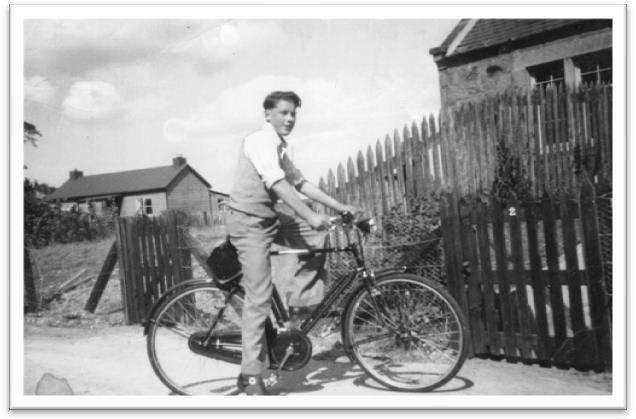
The first change of horses on the long journey from Inverness was at Drumossie, the next was at Mealmore and then Freeburn at Tomatin which is sadly no longer there. (Something that I can never understand is why the people of Tomatin allowed such an historic landmark as the Freeburn Hotel to be destroyed or historic Scotland did not stop the destruction of this building. When I first went back to Tomatin after the hotel was knocked down I was told that it was not a listed building, yet I ken when The Little Chief wanted to take over the site, part of the condition was that they were not allowed to alter any part of the main building).
From Tomatin, which was the last change of horses, it was then on to Glenmazeran, reaching there about midnight at which time he would then have to feed his horses before he got something to eat himself and go to bed and be ready to start the homeward journey the next morning to be back in Inverness in time to load up for the next day.
My foster Father worked on the P.way section of the railway which stood for permanent way, this was very hard work but work that they all took a great pride in. The first job that he had to do each day was to walk the line to the halfway point between Tomatin and Moy where he meet the Moy section worker coming the other way. Not only had they to walk but they had to carry a ten pound hammer, a large spanner, a canvas bag containing a red and green flag and also a tin with detonators. They were round disc with lead wings on them. The disc was placed on top of the rail the lead wings were then moulded around the rail. This was set some way back from any disaster that they came across on their inspection of the railway and when the train passed over it the detonator exploded, warning the engine driver of the impending danger.
The hammer was to put back any keys that had come out. (A key was a block of wood that fitted between the rail and the chair to keep the rail tight (the chair being the metal block between the rail and the sleeper which the rail sat on). The spanner was to tighten the nuts on the connecting plates between the two rails. It was a dangerous job too as you had to walk with your head down looking at the rails for any mishaps. On a windy day your hearing would be impaired. One of Father’s friends that he would meet between Tomatin and Moy was killed doing that same job as he walked up from Moy.
One of the P-way gang would walk to the half way point of the line to Slochd. As I said, the men of the P-way were very proud of their section of the line and went to great length to keep their section better than the others. The grass edges were trimmed to the metal and were kept straight, neat and tidy. There would not have been a weed to be seen on the earth between the two points. The worst part of the job was in the winter when they had to go on night shift to keep the line open working all through the night in some of the worst weather that even the dog wouldn’t go out in. It was very responsible and back breaking work. There was no mechanical assistance just a hand held scraper and shovel as the points had to be scraped clean in order to ensure it was safe for the trains to run safely and on time. If the rail system was not cleaned properly they could not close and lock the points which created a great danger to the general public.
Safety was the main concern of everyone in the days of L.M.S. and of British Rail. The metal that the rail and sleepers sat on had to be riddled regularly. I’m not quite sure why they did this but think that it had something to do with the metal providing a spring in the rails. If it was allowed to pack solid then the packed earth would leave the line uneven and therefore unsafe. As I said, safety was the top priority of the railway company.
Another tip from those days gone by was when Father had to use a shovel for snow work. He would take it in and heat it over the range and when the shovel was warm he would then rub a candle all over it forming a film of wax which would prevent the snow from sticking to the shovel. That shovel was not used for anything other than shovelling snow until the winter was over, being re-coated with wax every night that the shovel was in use. Anyone who has shovelled snow knows how frustrating it is when you have to keep knocking the snow off the shovel. The film of wax had to be just right in order for it to work. Too thick and the snow would stick to the wax, too thin and the snow would stick to the shovel.
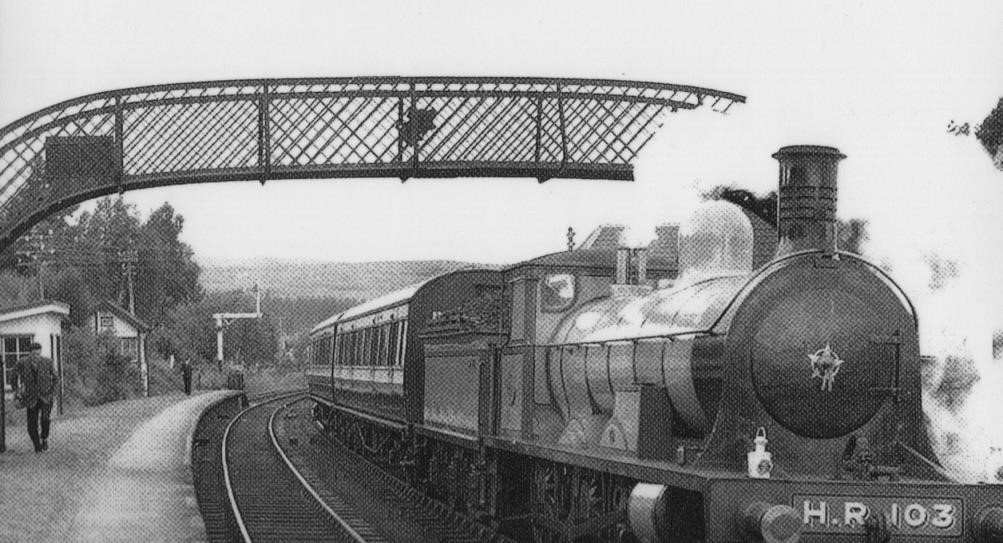
Kathleen, my foster sister, started work in the laboratory at the Distillery when she left school. She later married Billy Hendry who worked for the Forestry Commission as a Forest Ranger, a job that involved him working outdoors. As he was always out in the woods and moors he contacted lime’s disease which is a disease passed on by ticks and which made him seriously ill. So bad that at one time he was confined a wheel chair. Thankfully he went on to make a full recovery. Lime’s disease was new in this country and almost unheard of back then.
After they married, Kathleen and Billy went to live and farm at Garbole. The farm was rented from the Forestry Commission and Billy worked it part time with Kathleen looking after the animals when he was out at work. It was a way of life that worked well and they were both very happy with their lot. Then after a few years they were able to buy the croft from the Forestry Commission. Once they owned the land they went on to build a new home in the style of a log cabin and when the family left home to make their own way in life, Kathleen went back to work at the Distillery in the Visitor Centre. Sadly Kathleen died young, the last of my adopted family which makes it even sadder when I look back on a family that gave me a home. Now sadly I am the only one left.
I remember as children, Kathleen, Alistair, the Macleod kids and I would take an egg-cup of sugar and a stalk of rhubarb from the garden and then go and sit on the bank behind the railway workers hut where there was a small hillock. There we would sit and eat our rhubarb while we watched the trains go by, and wave to the passengers wondering what faraway places all those people were going.
When Alistair died Kathleen phoned me to tell me the sad news and we arranged that I would go down and we would meet at our old home. After sharing our sorrows, we wandered aimlessly around the old haunts of our childhood. It was as if Alistair was with us as we shared our memories of when we were children together, going to all the old haunts of those carefree days. I am so glad that we had that time together like the two children we use to be.
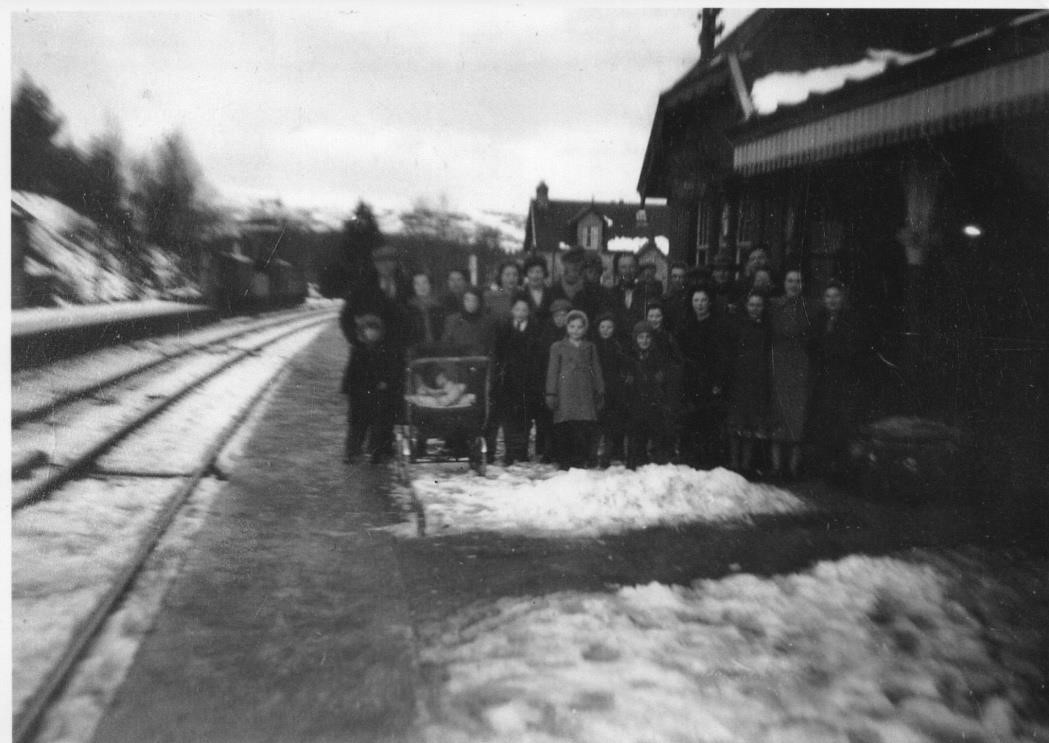
No2 Station Cottages was also where the Tomatin concert party practiced as Mother had a piano, the only one in the village. The piano was not only used for practice but was lent to the hall for concerts and dances. I remember that it was a big upright piano and that it was very heavy and took about six men to move it on to the back of Tommy the Coal’s lorry. It was a big upheaval to shift it each time but such was the commitment that the people of Tomatin had for their community. Dad gave a good version of Harry Lauder and he also performed a good comedy act. The house was a hive of activity on practice nights as there would be the Tomatin Strathspey and Reel Fiddlers, singers and some practicing their lines for the sketches and other acts. It was a house full of merriment and happy memories. The Tomatin concert party took their acts all around the local country side.
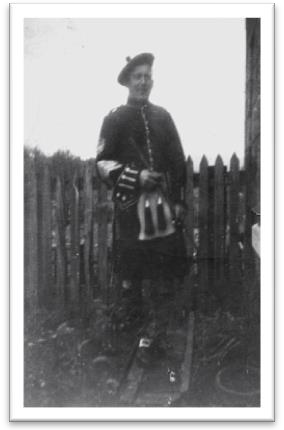
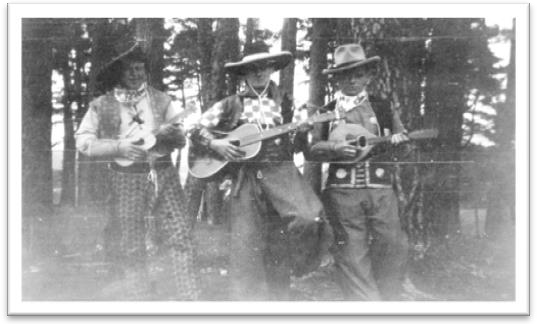
No 3 Station Cottages was the home of the Mackintosh family. Mrs Mackintosh was always known as ‘Mrs Mac’. I don’t remember any one calling her by any other name. Her husband Jocky was called ‘Sporran’ and he was the ganger on the Slochd section of the railway line. Apart from working on the railway he was also the local barber with hand clippers and scissors in his pocket while the bowl was always supplied by the household. He would set off on his bicycle around the village to whoever needed a haircut. The clippers were generally so blunt that it more often plucked the hair out than cut it! I think that he charged sixpence a time for the torture, a few minutes to cut the hair and the rest of the night to talk and have a dram or a cup of tea – most of the time it was both. Their children were Mhairi, Sandy, Kathy and Jean. Mhairi went to Aberdeen to do her nurses training. Sandy was a Lorry Driver with Highland Haulage and also sang country and western songs at the Tomatin concerts. Kathy and Jean were in school but both sang at the concerts also. The ‘Sporran’ also played the bagpipes at Burns nights, concerts and any other occasion that called for bagpipes to be played.
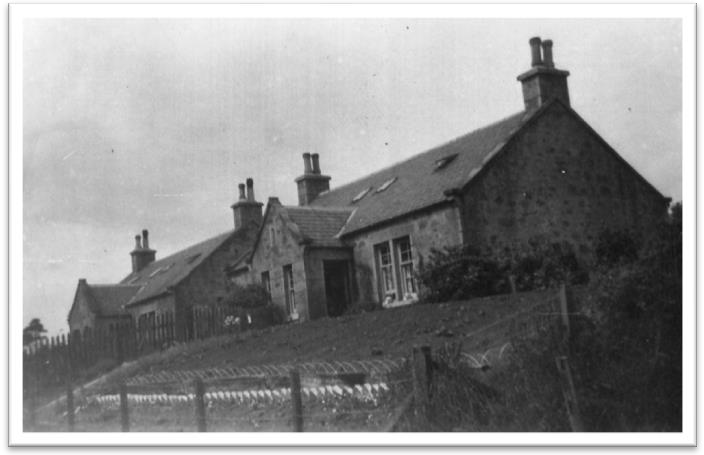
At No 4 Station Cottages were Jock and Anna Noble and their two sons Jackie and George. Jock was another ganger on the Tomatin railway line while Anna was Mother’s eldest sister. Jackie, the oldest of the two sons, was away in the RAF but came back to become the Tomatin postman, a job that he did for the rest of his working life in all weathers. George was a lorry driver with Highland Haulage in Inverness.
‘Old Jake’ as Jock Noble was called was as tough as old boots. There was a night in the Freeburn bar where some lads were having a pint. They were up from Glasgow to paint the steel viaduct and were boasting how they were doing a dangerous job and how it took a great deal of nerve to do what they were doing. Jake, who had had a few jars of beer and maybe a dram or two said that that was nothing at all and that he often went down after jackdaws (they nested in their hundreds on the girders of the bridge). So the Glasgow painters challenged Jake to go down and place a dated ha’penny on each end of the catwalk and if he did this they would each give him a dram the next night. Jake went up that night and put the coins sitting on each end of the catwalk ready there for them when they started work the next morning.
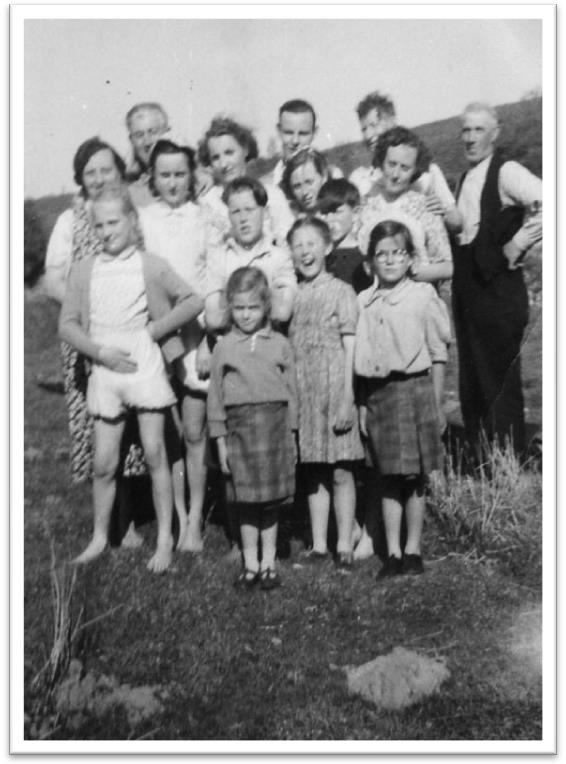
Behind the Station Cottages was a steep bank with a wood of granny pines and larch trees. On one larch tree we had a rope tied high on a branch and the end of this was then pulled to the top of the bank where we were then able to swing about 20 to 30 feet in the air, holding on to the rope and standing on a post tied to the bottom of the rope.
I don’t know who tied the rope or how they managed to get it that high. It was dangerous as all we had was the cross post to sit or stand on. It was great fun and no one ever fell off which was due to good luck and would not go down well with today’s health and safety brigade. The parents would have gladly had it cut down but no one could reach it. As I said I don’t remember who tied it in the first place although there is one person that I knew who would have had the nerve to do it and that would have been George Buchan. Sadly every tree was blown down in the big gale of 1953 and the trees were later cut for the saw mill by Bill Kelly and Wallace Gould.
At the front of the Station Cottages and across the railway line was the ‘paddock’ pond (in English terms – a frogs pond) so called for the hundreds of frogs that came to spawn there in the spring The pond became the skating pond in winter which could be frozen over for weeks at a time.
The frost was a big problem for the Station Cottages and the Station as the tap water for them came from the Slochd and had to cross the steel viaduct in a cast iron pipe. Although the pipe was lagged with straw and a thick waterproof canvas cover, being so high and exposed it would still freeze and when this happened the children of the Cottages would have to walk down the bank at the back of the house to a spring that came straight out of the ground and which never froze over. The water was trapped in a small dam with a cast iron pipe set at the top to form a spout and this enabled one to fill a pail with this clear cold water from the ‘spootie’.
The one thing about the water that came from this spring was as I said, that it came straight out of the ground and no matter what time of the year it was the water was always cold and during the winter it never froze. There we would have to wash our face in the ice cold water, brush our teeth and take a pail of water back home before going to school. Imagine going down on your knees in the snow to wash your face. As there were three of us the pails of water would keep Mother going until we came home from school when the first thing that we had to do, after changing out of our school clothes, was to fetch water. If you can imagine us boys walking through knee-deep snow in short trousers or the poor girls that had to wear skirts walking to school through snow up to their knees and the bottom of their skirts trailing in the snow and then sitting in school all day with wet clothes on. The girls weren’t allowed to wear trousers in those days, but we kids were a tough lot or perhaps it was only the fittest that survived.
About 300 yards down the road on the left was a small sand quarry where the sand for gritting the Station road was riddled. Across the road was the cattle creep which is the small bridge over which the railway track ran, this now has a large iron gate across it blocking the way through – another big mistake that the new generation of Tomatin residents allowed to happen. It’s sad to see this for as the name indicates, this is a right of way to the other side of the railway where sheep and cattle could pass through to the hill. It was also the way to Toor-Ran-Noo-Ran at the top of the shop burn. In my opinion this a very dangerous act as it has now left the only one way to the other side is to cross the railway lines.
Toor-ran-noo-ran was where we went, weather permitting, every Easter Sunday for a picnic and to roll our hard boiled and painted eggs. The Mac’s,the Macleod’s, the MacRae’s and the Gall’s from the Distillery and many more would all be there. After we rolled our eggs, wood was gathered for the fire to make ‘tinkers’ tea. As the water boiled all the kids would set about re-building the dam with stones, turf, and branches. The dam would have been damaged over the winter and this would serve as our swimming pool for all the picnics we would have throughout the summer.
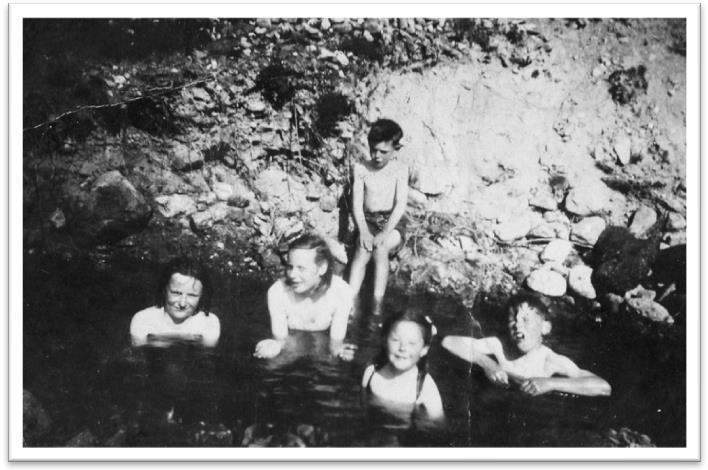
Nearby there was the ruin of an old stone house with its lawn-like grass around it. It was here that we would have races and have all sorts of fun. The grass was so short and soft that we believed that it was cut by the fairies in fact our parents told us never to go there on our own as the fairies would spirit us away. I think this warning was more to do with keeping us away from the water so that we wouldn’t be tempted to go there on our own.
It was through the cattle creep that I would go every morning to check my rabbit snares as rabbit was a welcome meal in the nineteen forties and fifties when meat was rationed. This was a great place too for wild life, crossbills, crested tits, gold crests and black game were some of the birds that could be seen around Maggie’s hole, so called because of the waterfilled quarry where Maggie the butcher dumped her waste and her tins. Here was where we split an oil drum with chisels to make into a boat that we could sail in the quarry which was always full of water. Then we would climb up the rock faces around the quarry, pretending to be some great explorer and we would then pretend to capture some distant land in a daring raid across the sea. Jock Noble and my Father thought that this was a dangerous thing to do and they punched holes in the half drum and sank it. In return we salvaged it and made wooden pegs to seal the holes along with a bit of sacking. This was even more dangerous as the pegs sometime came out when we sailed it although this only added to the excitement.
The next road on the left was the Blacksmith Lane or Coalhaugh. It was here that Vera Buchan lived with her son George and her daughter Ann. Wallace Gould also lodged with them. Wallace came to the district during the war with the Newfoundland Overseas Forestry Unit. He worked with Bill Kelly in the wood and was a very skilled axeman. He had a round flat stone disc that sat in the palm of his hand which he would sharpen his axe with until he was able to shave his arm with the axe. Once he sharpened the axe he would then throw the axe up high sticking it into a tree. Seemingly this was how they left their axes for the night when they all worked as a gang in the woods during the war. They were great ones for gambling and would make a mark on a tree to see who could get nearest to the mark by throwing their axe at it.
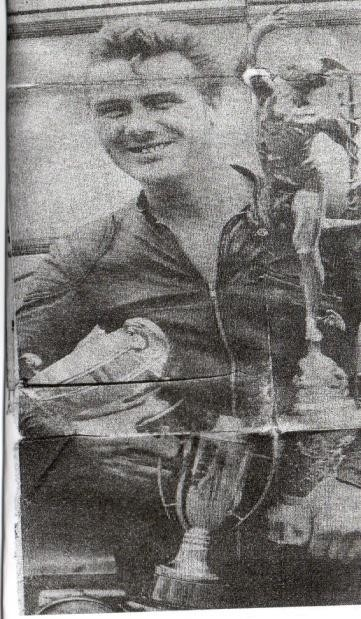
George Buchan was my hero as he was with all the young boys of the village. He didn’t receive the recognition that his feats on the motor-bike racetrack deserved, ending with the highest award in the British Motor Bike Racing Circuit, winning the Manx Grand Prix on a 350cc Manx Norton and breaking the track record which he held for many years. In addition he just missed out of winning the 500cc race through a mistake made by his pit team who gave him a wrong time after which he slowed down which put him in second place.
I remember when I was about 11 or 12 years old I found an old gate-change BSA motor bike in Maggie’s hole and I wheeled it down to George’s garage where he fixed it up to run on paraffin. I had a lot of fun on it. The trick was to unscrew the top of the carburettor and fill it with petrol and once the engine fired, the tank was switched on to allow the paraffin to flow. I then became the future British champion up and down the Station road. I could do this all day as there were no cars on the road, only Tommy’s coal lorry. Sadly I think the bike got lifted as scrap by the tinkers for when I came home from school one day it was gone, which ended my career as a motor bike racer.
Another time when I was in my teens and had been to Inverness on the Saturday, I bought a pair of ‘brothel-creepers’. They were leather shoes with big thick crepe soles and were all the rage at the time worn with drain pipe trousers. I set off to meet the lads to arrange a taxi to go to a dance in Aviemore. On the way George came along on his new Vincent Black Shadow motorbike and offered me a lift to the pub. As we flew along the road George leaned the bike over on a sharp left hand corner and the sole of my new shoe parted company with the uppers! He had to give me a lift back home for another pair of shoes. There are not many of us who can say that they lost their sole on the back of the British Champion’s motor bike.
The next building was the Blacksmith’s shop where Jock Bruce worked, shoeing horses and producing wrought iron work. I once had to draw a scaled drawing of a fire basket that he was to make to send to a client in America. The ‘Smithy’ was a great place to go to. When I was at Inverness High School we had an art exercise which was to draw a scene looking through a window. I chose to draw a scene looking in on a Blacksmith’s Shop and although I won first prize I could not capture all that went on within. The sparks of the red hot iron as it was struck with the hammer for the first time after coming out of the forge. The ring of the anvil as the blacksmith bounced the hammer off it to get the rhythm of the strike. The smell of the hoof as he pressed the hot iron on, to see how the shoe would fit the horse. The hiss of the iron as it was plunged into a bath of water to temper it and the way that he could join two pieces of metal to look as one. All this could not be captured on any painting or photo.
It was here that as a 15 year old boy I took the Freeburn Clydesdales to be shod and when I was sixteen I took a string of six hill ponies from Coignafearn leaving at 5.30 am and not getting back to Coignafearn until 10.30 pm. Of course I was able to go home for something to eat while the ponies were being shod and I was able ride on one on the return journey from the Smithy.
Jock was always full of fun and every morning he went to the shop for his paper young Charlie Edwards who’s father was Head Cooper at the Distillery at that time and lived in Bal-an-Doune. Jock liked nothing better than to have a tear with young Charlie. Young Charlie was about four years old, and not long after his sister was born, Charlie would run to the gate to see Jock. One morning Jock pretended to Charlie that he was coming over to take the baby home with him. But Charlie told him that he couldn’t take the baby because he did not have balloons with milk in them to feed the baby!
At the back of Jock and Mrs Bruce’s house lived Old Mary and her lodger ‘Ginger’ who worked on the roads, he also worked in the woods with Bill Kelly. At the end of the station road was a small hut-like building made of ‘backs’ which were the first boards from the sawmill with the bark still on them. They were tarred over to water proof them and it was here that ‘Maggie the butcher’ had her shop. There were no Health and Safety or Hygiene rules in those days, sawdust on the floor, one big block of wood for chopping all kinds of meats, corn beef, mutton, and liver. They were all cut on the one chopping block! I can see it yet, there was a window with zinc mesh over it and on the outside this would be filled to half way up with dead bluebottles!
If a bit of beef or a sausage fell on the floor she just wiped it on her apron and wrapped it in greaseproof paper with the customer order. Cooked and uncooked, meat were then wrapped in newspaper for the customer to take home. I never heard of anyone having food poisoning. Maggie went up to the station once a week to collect her meat with a peat barrow off the Inverness train, coming back down the road with a sheep carcase and other sort off cuts of meats in the barrow. The barrow would be open to all weather and dust.
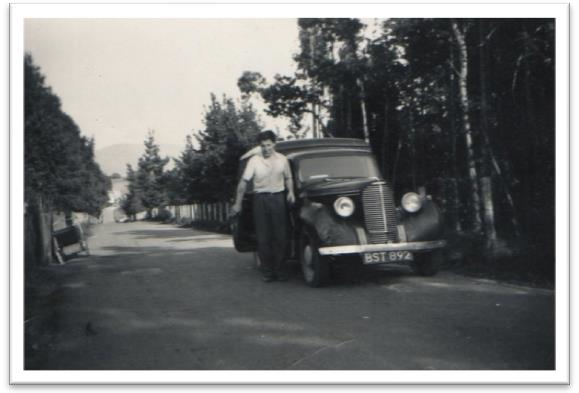
There was also a butchers van that came once a week. Kenny the butcher came from Aviemore after Maggie closed her shop he would also take any spare rabbits in exchange for meat. Also Burnett’s bakers van came twice a week as well as two grocer’s vans and a fish van. When the fish were in season the tinkers would sell Kessock herring at 6d a dozen or two and a half pence in new money. Perhaps the most colourful of all the travellers must have been the Onion Johnny. They worked in pairs going around the country on their bikes laden with onions strung on two strings of straw ropes per bunch. They would push their bikes around the houses then cycle back to their store which was a Citroen lorry covered in by a canvas cover. Unlike the conventional domed lorry covers they were shaped like a tent with straight sides and sloping roofs. I think that the Onion Johnnies slept in the back of their lorry among the onions.
By the time food rationing ceased in 1953-54 I was in Inverness High School and Mother started to get her groceries from Lows in Inverness and as I knew my way around the town, it became my job to go to Inverness for the groceries then to go to the pictures in between buses. It used to fascinate me in the store when you paid for your order the money and the bill was put into a cylinder then into a pipe in which it shot up into the loft where the cashier would mark the bill paid and send back the change. I would then take out my nine old pence for the pictures and the box of groceries would be sent round to the bus station for me to collect. I also knew most of the bus conductresses on the route. I often got up and down and back for free!
Next door to Maggie’s shop was the post office where Mrs Ross was the post mistress. She was a person who seemed to have been there forever and never seemed to get any older. She was there when I was a boy and sometimes asked me to deliver a telegram on my bike and she was still there to send a telegram to my wife June when my own first son was born. The one memory of Mrs Ross I will always have is of her walking every day to the phone box on the other side of the stone viaduct with a brush and shovel to clean it out. Not only did she brush it out but she took home the sweepings with her. There was an incident that happened around 1960 when a person who shall remain nameless started to use the phone box as a toilet. Although the police were told, they could never catch the person that was doing this until one morning Mrs Ross found the evidence that would track down the culprit. She phoned the police who came up and arrested him as the evidence was foolproof. Which was he had used an envelope with his name and address on it for toilet paper. I suppose that’s what you would call an open and shut case.
Back Station Road and the Distillery
There was only one house down the Back Station road and it was at the end of the road, this was where brother and sister Jock and Maggie (Pole) Watson lived. The cottage was a small stone and lime house without water or any mod cons. Jock worked as a horse man at the Distillery. His horse was called Besom Jean which sadly out-lived him.
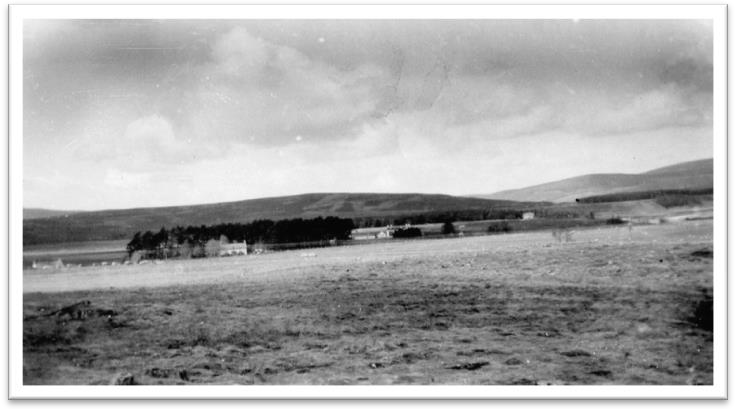
His sister Maggie was quite frightening to us children. We used to think that she was a witch dressed in long black flowing clothes as she shuffled along with her skirt trailing in the dust. She always had a knobbly stick as she picked wild plants along the side of the road which we thought she used to make spells with. I think the older people were a little scared of her too for no one would ever do anything to upset her. I remember when she came to the house she was never turned away and always stayed until she got tea and a scone. I have even seen Mother baking scones so as not upset her.
Tea was always sold loose in those days, there was no such thing as teabags, they hadn’t even been invented. Mother used a tea strainer when pouring tea into the cups. However when she poured Maggie’s tea or anyone else that was in the house at that time Maggie told Mother not to use that new fangled thing –“ the tea strainer, “as it spoiled the taste of the tea,” although if the truth were told it was because she could not read the tea cups. This she did by turning the cup three times around then turning the cup upside down on the saucer. She would then read the pattern that the tea-leaves left on the side of the cup, which she could not do after the tea strainer. It would surprise you how many people believed in what she told them the tea leaves said. The older people were a bit scared of her and would not disagree with her. After she went home the cup that she had her tea out of was put into a pan and boiled then put away until her next visit. This was known as Maggie Poles cup and pan, and although she was not welcome, no one would dare say so.
A very spooky incident happened on the Back Station road. It happened one dark night in the early 1950’s when Mother was cycling home from the Freeburn Inn where she worked part-time. Out of nowhere came a big dog knocking her off her bike. It was a big black stag hound type of dog and after asking around who would have such a dog no one had seen or heard of it until one night when we had a visit from Jimmy Dunbar. He had all the folklore stories of the district and he told her the tale about the Witch of Laggan and that the hound she had seen was old Nick (the devil) who roams about waiting for the Witch to come out of Dalarossie Churchyard. Needless to say Mother would never walk or cycle up that road on her own in the dark again. I was telling Gwen Grant (nee Thain) about this one time, and she told me a similar story of her sister Nell having an encounter with a mysterious dog back in the early 1940’s. She too would never walk on her own along that road again in the dark again.
For those that have never heard of the tale of the witch of Laggan. It goes something like this . There was once a witch who lived in Laggan in the Badenoch district. She was so feared by the locals that when a child was born, it was baptised before the witch would appear as a cat and suck the breath away from the child (this was more to do I think with a cat getting in the cradle and smothering the baby, leading the people thinking that the cat must be a witch because the baby died).
One night, a hunter from the district, known as ‘a persecutor of witches’ was caught in a violent storm after a day’s hunting in the forest of Gaick. He sought shelter in an old bothy with his two faithful dogs. Once inside he built a big fire to keep them warm. After a while he heard what he thought was the sound of a cat. It began making so much noise that he decided to investigate and on looking outside there was a big black cat looking forlorn and bedraggled. The cat spoke and admitted to being a witch but said she wished to repent of all her misdeeds if he would be kind enough to let her share the shelter and warmth of the fire. The hunter feeling sorry for her, let her in. His dogs growled and made to attack her and she took two hairs from her head and asked him to tie up his dogs. He took the hairs but only pretended to tie the dogs to the rafters.
Crouching by the fire the cat warmed herself and before his eyes grew bigger and bigger as her shape changed into someone he recognised as a friend of his wife – The Good Wife of Laggan. It was then that he realised that she was the Witch of Laggan. The dogs bared their teeth and growled as she shrieked “Fasten hair fasten”. She assumed that the hairs were tied to the dogs and would tighten on the dogs and choke them. The hair tightened so fast to the rafters that the rafters fell down, the dogs not being tied by the witches hair jumped on the witch and sank their teeth into her breast where they hung on but were doomed to die from the poison of the witch. She then took the shape of a raven and flew off into the night leaving the distraught hunter with his two dogs, dead at the door.
After the storm eased the hunter buried his dogs and returned home. His wife was not there at first but when she did return he discovered that she had been to the home of The Good Wife of Laggan, who seemed to be on her death bed. She told him that her sick friend The Good Wife of Laggan had been cutting peats and had been drenched by a heavy shower causing her to catch a severe chill. The Hunter went to the woman’s house and in front of her friends stripped off her clothes and there for all to see, he revealed the dogs teeth marks proving that she was the Witch of Laggan.
The Witch screamed in horror that she was about to die and that Satan would come for her soul which she had promised to the devil and that she would burn in hell. Seeing the devil coming for her soul she started to run away. However the devil started to catch her up, but being a witch and having the power she turned herself into a brown hare to try and out run him. However he in turn, turned into a hound and chased the hare.
The witch ran over the hills past Coignafearn and by the time the witch got to Dalarossie Churchyard she was exhausted. So she jumped over the wall of the church into the churchyard and safety, as this was consecrated ground which Old Nick couldn’t enter. It is said that as a hound he roams around Strathdern waiting for her to come out of the churchyard. To this day I know of people from Badenoch and Strathspey who will not eat a brown hare for fear that the hare may be the Witch of Laggan, who had been making her way home from Dalarossie and if they should ever eat one they may be eating the witch and would die of poison, as the hunter’s dogs did, such is the strength of superstition in some of the people of Strathspey.
Back up to the station at the north end of the platform was the station master’s house. Mr Smith was the station master and a very good gardener. It was his job to keep the books and to sell tickets to the passengers.
Then across the railway and through the banging gate along the Puggie Line before going into the Distillery, there was a path that went down to where the Distillery offices are now. On the left was a big dark warehouses and on the right were three big houses. The first was the brewer’s house. Mr and Mrs Macdonald stayed there and they had a son John who went to one of the Speyside Distilleries to learn the distillery trade. John played football with Rothes in the Highland League and he came back to Tomatin to take over from his father as brewer when his father got made up to manager. John also became manager of Inverness Thistle football team going on to become a director of Thistle and then on the board of Caledonian ‘Caley’ Thistle.
Old Mr Macdonald was nearly killed outside the house. When they were building the new offices they took down an over head cable that was left lying live, on the ground and that night one of the horses that was hired to cart out the peat’s from the moss stood on the live wire. Going out in his Wellington boots to see what the noise was all about, Mr MacDonald caught the horse by the bridle to try and get it onto its feet. He was thrown to the ground but luckily he escaped with just burns while the poor horse was killed with the electric shock
In 1958 when they were making the second film of the Distillery, ‘Shorty’ as old Mr Macdonald was called, was in a bit of a flap to get things right. All the workers were given new dungarees so as to be dressed all the same and the malt men were given canvas boots – all very smart. The day before the film crew were due to start ‘Shorty’ went around all the men to tell them what he wanted them to do on the day of the filming. When it came to Ian Ross, (who was the strongest man that I have ever known,) he told Ian that he wanted him to drive the tractor and take in coke for the drying of the malt to which Ian replied “I’m no going into your film”. They argued back and fore until in the end Shorty said “You will have to, that’s what you got your dungarees for”. Ian said nothing and just walked off. That afternoon Ian sat on the wall in the malt barns and unpicked the stitches on a hem that his wife took up on the legs of his new dungarees.
Then at the end of the day when the men were all lined up for their dram Ian walked past them all throwing the dungarees at the manager saying “there’s your dressing gown and I’m still not going into your film” and with that he walked off leaving Shorty speechless. As I said Ian was the strongest man that I have ever known and I remember once, when the Puggie went off the rails and Alistair, Charlie Edwards and young John MacDonald were trying to lever it back on the rails with a railway sleeper when Ian came along to start his shift. They asked him to help them to get it back on to the rails to which Ian said “get out of my road” and took hold of the sleeper levered the Puggie up and placed it gently on to the lines and then walked off after his feat of strength.
The next Distillery house was the Latham’s. Mr Latham was the Exciseman for the Distillery. No lock could be unlocked without him being there with his set of keys, as two sets of keys were needed to open any lock in the distillery. One was held by the Exciseman and the other by the Distillery Company. Mrs Latham was the concert piano player and their family were Paddy, the eldest son who was a ship’s captain and the youngest to hold such a licence at that time. Shirley was next and then George who went on to be a Lieutenant Colonel in the army. He married the daughter of the High Commissioner of Malta. Then there was Joan and then Lenny who was still ever the rebel. He went to work in a tea plantation and I don’t know if he was sent or if he went of his own accord. Next came Jill who became a doctor at Raigmore Hospital in Inverness and finally there was John who was the youngest.
Old Jock Latham was a very clever man as was all the family. I remember one time when he was up in court for drunk-driving and how he conducted his own defence, in fact I think that before he went into the Excise he was originally destined to be a lawyer. That morning of the trial, on the bus going to school, Lenny said that he bet that his father would get off. The next day in the newspaper it was reported that when he cross examined the policeman who arrested him, he asked him how he knew he was drunk? The constable answered that he smelt of whisky and that his eyes were glassy. Mr Latham turned to the judge and said “Your honour, of course I would smell of whisky, I work and spill the stuff on myself every day and as for my eyes being glassy, well its made of glass” with which he took out his glass eye to show the judge to which the judge replied “Case dismissed”.
In the third Distillery house was Farquhar who was the Manager. I remember as a wee boy, when we went to the tattie picking, the women who were there would be at him for coming on to the field without taking a dram to them. He always went off and came back with one. The next day he would do the same thing and I think he just did it to wind up the woman as he liked nothing better than to wind them up and have a laugh with them. There were also five houses at right angles to those three big houses as they were called. These were for the workers. The first was ‘Old Ford’ who was a cockney and the next was ‘Old Willie Gall’ and Mrs Gall whose family were around my age. They were Billy, Robbie and Sandy and they were the Galls that went on the picnics with us and went sliding on the frozen paddock pond.
Billy Gall was the one who found where my sister Muriel lived. There was also an older family from Willie’s first marriage who were James (nicknamed Boyen), Christine and Jean.
In the third one was old Billy Dodds, a widower and his family – Isobel, Grace and Billy. Billy was my age and the girls were older. Old Billy was a fine old man who was very fond of children. He always had a sweet in his pocket along with his black twist tobacco which he would chew constantly and spit out on the malt floor. It was easy to see where Old Billy ‘turned’ a floor as it was full of black marks where he had spat out his tobacco.
It was Old Billy that first taught me how to turn a malt floor when I was still at school. Old Billy liked a dram or two on a Saturday and sometimes he had one or two too many. So his son Billy and I would go up to the Distillery to help him out.
When sober he was one of the best maltmen that I knew. Thanks to his teaching I became not too bad at it myself. The secret was to turn the floor back and fore changing hands at the end of each row, throwing the malt up in the air to cool it down but at the same time leaving it level as any bump would cause the barley to heat more and grow faster than the rest and spoil the malt. ‘Malt’ was made by first soaking barley for three days in water and changing the ‘steeps’ each day to circulate the air in the barley. It was then barrowed out onto the floors then it was spread out where it stayed for seven days turning it often to stop it from growing or heating. The secret was to allow the green shoot to grow inside the seed to within three quarters of its length. It was in this green stage that the sugar starch was produced. After seven days the ‘floor’ was put onto the kiln to dry by a fire of coke, a hot smokeless fuel to which peat was added to give flavour to the malt – for it is only when the barley is dried can it be called ‘Malt’ .
At No.4 was Peter Thain who was also a widower and by the time that I was old enough to remember he had only Gwen and Bobby at home. Bobby married Iris Curtis whose father was the proprietor of the Freeburn hotel. Gwen married Jock Grant from Duthil and we became lifelong friends when we both worked in Tomatin Distillery. Later we both moved to Tomintoul where Jock went to work at The Tomintoul Distillery and I left Tomatin in the late 1960s to go back to farm work.
I remember Jock crossing the River Findhorn and catching a salmon from behind the big stone below Freeburn after I had fished it from the Freeburn Hotel side on the day of my 21st birthday, a fish he never stopped reminding about. We can spend over an hour on the phone talking of old times back in Tomatin. Jock and Gwen and I made an annual trip back to Tomatin for old time’s sake. Jock was a good fisher and took many salmon from the Findhorn River but I think that of the three of us, Gwen was the best fisher so much so that we called her the heron . Jock’s five minute to fame, which will last forever, was when he was asked to take John Laurie (of Dad’s Army fame) fishing at the start of the 1953 film that was made about Tomatin Distillery.
Next to the Thains lived the Logans in No 5. I don’t remember much about them except that he worked in the malt barns and had left before I started work in the Distillery.
Across the burn there were three houses belonging to the Distillery, two at the bottom of the Free Brae and the other one was a bungalow between the railway and the A9 road. This was the Ploughman’s house.
Jimmy Macdonald was the ploughman and he always worked with horses until the Distillery got a a Fordson tractor with iron wheels. There was a platform that you could stand up on, which Jimmy always did as the seat could be very uncomfortable. The brake and clutch were on the same pedal and could stop suddenly when pressed. It wasn’t an automatic as it still had to be put into gear. There were a lot of broken posts on the farm until Jimmy got used to the idea that thing would not stop until the pedal was put down and not when he shouted ‘Whoa’ to it! It was also the first tractor that I ever drove and this came about when I was lifting turnips with a horse and cart from the field across the road from Freeburn to Free farm when the horse took colic and collapsed in the field. After cutting it out of the cart and getting it back to the stable I went and reported to the manager what had happened.
When I told him what had happened to the horse, he just asked if I had finished taking in the turnips and when I said that I had not he told me to take the tractor and carry on taking them in with no thought of the poor horse that had to be put down. When I told him that I couldn’t drive a tractor he replied “Then you’ll just have to learn”. I was 15 years old and had to get on to a tractor and drive. Needless to say I got into some tight corners trying to reverse the tractor that I was not able to get out of.
In the 1950’s a boy was cheap labour and they were expected to do a man’s job for a boy’s wage. Another example of this was in the same year (1956) before my sixteenth birthday on a very wet day. The field below America Wood which was the wood above the Distillery. Before the open hill the field was cut by the binder ready to be stooked (this was to put the sheaves in groups of ten or twelve with enough lean to have a space that allowed the wind to pass through them). They were set facing east and west to catch the prevailing wind. As I said it was a very wet day and I was sent on my own to set up the sheaves. It was so cold and wet that I did not stop for lunch but worked on until I finished the field. When I was finished I went to the Distillery to try and get dry and eat my lunch as I was standing in front of the Still fire with water running off me and in a haze of steam when old ‘Shorty’ came in and asked why I was standing there instead of working in the field. When I told him that I had finished and was drying out he then told me to stop standing there and go and feed the ‘beasts’ (cattle).
As a boy who was told never to speak back to my elders I just had to go even though I was cold and wet. It is often said that farm labourers were treated like slaves but they were treated worse than slaves. A slave was bought by the master for good money and as such his health and wellbeing was important to that master and his investment. A farm worker on the other hand was costing the farmer money and if he did not work it was easy to replace a man as there was always someone willing to take his place for a few pounds. A boy was even easier to replace.
A boy was expected to do a man’s work for a boy’s wages. When I started work in 1956 I was expected to work twelve hours a day, six and a half days a week with one hour’s work on a Saturday afternoon and two hours on the Sunday, all for the sum of £2.9s.4p a week (£2.50). To refuse to do any job was to be told that they would get someone else to do the work, leaving you out of work. I remember once when the storm drain in front of the Distillery offices was choked and could not be cleared. Young John MacDonald sent down to the farm for the boy (me).
When I arrived at the Distillery I was told that I would have to crawl up the three foot (less than a metre) wide pipe to see if I could unblock the drain. When I got about 150 yards or metres up the pipe I found a sheet of plastic blocking the pipe which I split with my knife and the water came away with a gush, washing me back out of the pipe. When I went back to the manhole at the offices, I was told that that was fine and to go back to what I was doing which was hoeing the turnips. Having to work the rest of the day in wet clothes.
Some years later I was invited to the annual Distillery Staff Dance by Kathleen. I met young Shorty (John MacDonald) and he talked with pride about the time he sent me up the storm drain saying that he could not get anyone to do that today to which I told him nor would I do it now.
An example of how farm workers were treated was demonstrated in the days of the horse. The horseman would have to get up at 5am to feed and groom his horse before he had his own breakfast. At lunch time they stopped at 11.30am for one and a half hours. Again the horseman would have to brush down the horse and feed it before he had his own meal and then back out to harness the horse for the afternoons work.. The farmer’s way of thinking was that the horse cost money and as with the slave they had to be well looked after.
Down at the bottom of the distillery road where it joined the A9 on the left was the local football pitch which was given by Colonel Bullock to the football club when they played in the Strathspey League.
Free Farm Road and the Freeburn Hotel
So on with our journey and the first house as you turned left up the Free farm road was where Stuart Gordon lived with his wife, his son Jimmy and daughter Diane. Stuart worked as a Mashman while their son Jimmy was a great railway engine enthusiast and would get all excited at the different types of engines that we would see when passing Inverness railway station on the bus going to school. Diane was an extremely good looking girl that had all the boys wishing that they could take her out. Her father was very strict with her and as a result no one had the nerve to ask her out.
The next house was where Jock Kiel lived. He was the Head Maltman and he and his wife had two daughters Maureen and Anna who were younger than me and who were not in school at the same time as me. Jock left the Distillery not long after I started work there.
Next stop was Free Farm where Alex and Beta McColl lived. Beta was a sister of my Foster Mother and the McColl’s were the family that my biological brothers and sister and I went to stay with when we were first housed from Glasgow. Alex came to work as the shepherd for Tomatin Distillery and they had two sons Ian and Donald. Donald was much younger than Ian and was the son that Mrs McColl was pregnant with when she had to give up looking after us as a family.
At that time the farm was worked as part of the Distillery and was also run as a dairy to supply milk for the workers. It was Alex that I first saw making shepherd’s crooks, a hobby which I took up in my later life. It was also from Ian McColl that I got my first dog. She was a cross golden retriever cross collie and she was a faithful dog and a very clever wee thing and easily trained. As a wee boy I trained her to lie down when I pointed a toy gun at her and it went bang. I would send her away then go and look for her as if I was a big game hunter and she was the game. She was very ‘faithful’ as that was her name in Gaelic which I am not going to try to spell.
Across from Free farm was a rough track road and there were three large houses – The Gleanan, Glen Kirk, and Cottage of Free. Mrs Hoare was in the Gleanan and Glen Kirk was a holiday home belonging to the man that took the shooting at the Glen Kirk Estate, hence the name of the house. Cottage of Free was old Mrs Bullock’s home. She was the mother of the present laird of Tomatin House – Mrs Ann Glynne-Percy.
Carry on down that road through the railway bridge and there was a little wooden cottage which was the home of Murdo Macaskill. It was the house that he built for his family when he returned from World War 2, three and a half years of which were spent in a Japanese prisoner of war camp. ‘Murd’ as he was called, worked on the roads and was an extremely clever and resourceful person inventing many everyday things that made life easier. I think that I remember someone telling me that when he was a prisoner of war in Japan he invented a way to process rice while in the prison of war camp. Another thing that he made was a wooden shoot to fill the Lorries with sand for sanding the roads in the winter-time. The shoot was filled in the summer then when they wanted to fill the lorry it was just a case of reversing under the shoot and letting the sand slide down. The last time I saw him working on something out with his day job was repairing a dry stone wall around the Freeburn Hotel.
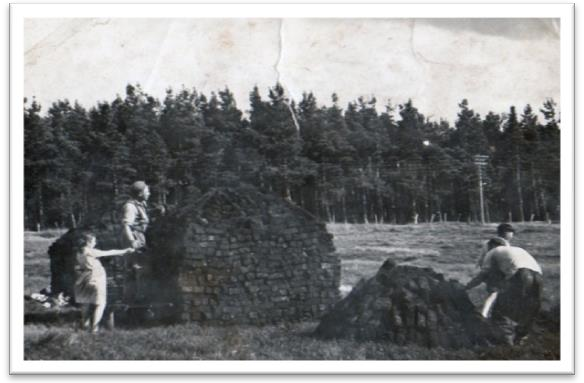
Murd was a great one for writing poetry and his father was called ‘The Local Bard’ or ‘The Bard’. To the left of the house was the peat moss where Murd cut his winter fuel and it was also here that my Father, with our help, cut his peats along with Roy Murray who worked with the Forestry. It was hard work but great fun though it was a terrible place for midges. First the section of moss would have the turf removed from the top of the bank and placed on the bottom of the bank which provided a dry platform for the cutter to stand on as well as returning the ground back to its original look. Then the peat was cut with an ‘L’ shaped cutting blade knife. The handle was broad with a step for one to put pressure on with their feet, it also had a large ‘T’ bar for extra pressure as the knife had to cut two ways.
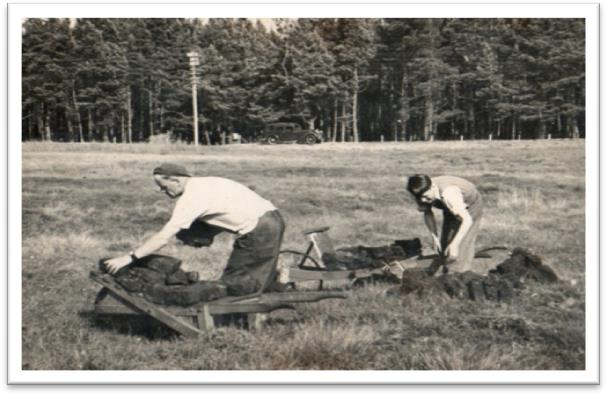
The peats were then put on to a barrow with a large front wheel and a closed in front board to stop the peats from falling off there were no sides on the barrow, this was so that the barrow could be tipped on its side to allow the wet peats to be tipped out without handling them. The peats were left there to dry on the top side then turned over to dry on the underside. They were then built into small heaps of eight or ten to dry further before stacking and covering them, ready for the winter.
Across the A9 in the small wood was the Manse where the Church of Scotland minister lived. There was also a little cottage where old Lizzie Ross (who was the sister of Ian Ross that worked in the distillery) lived. She kept a cow and a calf and when she needed milk she took her stool and pail and just went out and milked the cow in the field where she caught it and the cow just stood until it was milked.
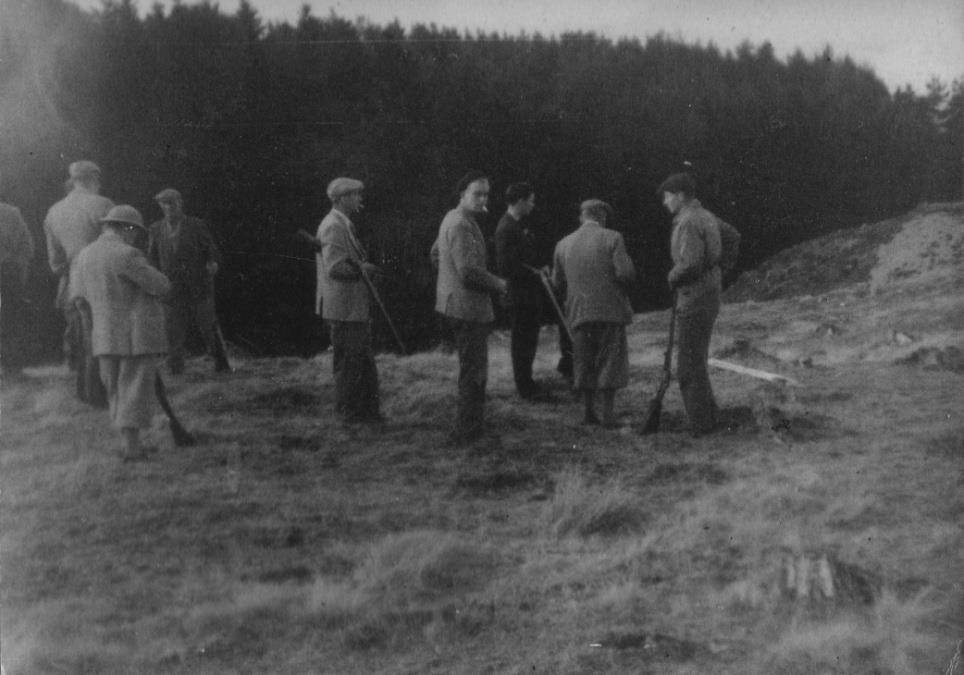
Between the Manse wood and the Freeburn just across the old A9 from Murdo MacAskill’s was where the clay pigeon shoot was held, just about where the new A9 joins the old A9
Walk back along the old A9 which was the only main road at that time and on the left was the Freeburn Hotel and farm buildings. The Freeburn was one of the smartest buildings for miles around as it was approached from the Inverness side you first came to the farm buildings where there was a track road going round the back of the buildings. The first thing to be seen was a flat top mound of earth which had a pit in the centre where when I started work there was a petrol and steam engine within this pit, which drove the corn thrashing machine this was housed in the barn. Before the combustion engine, it was driven by horses walking round on the top of the mound to drive the thrashing machine by the same shaft and gearing. At the end of the building was the horse cart shed which had two horse carts that hung by the chain that supported the cart on the saddle, they were coloured green and red with wooden wheels and iron rims. A little further on was the entrance to the back farm courtyard. Round the side of the building was the back door to the Hotel, where, on a Sunday afternoon many of the locals would gather.
You would see them sitting on beer cases enjoying a pint in the store room. The silly thing was that they could not go to the bar as you had to be bona fide traveller and had to have travelled over six miles. In other words you had to drive to drink back in those days.
After the horse that had to be put down with colic, (which I spoke about earlier on in the book) that evening, when I took in the cows, the bull did his usual walk sniffing the ground around the court until he came to where the horse was shot. He smelt the blood and went mad and he came charging at me crashing through a wooden gate and round the front of the hotel scattering the guests that were sitting outside. Every time I went near him he charged again and in the end I managed to get away to the Grieve’s house and got Charlie Mackenzie, who was the Grieve at that time, to come and see if we could calm the bull down. Charlie took a big rock and hit the bull between the eyes, stunning him long enough to get him in. Needless to say I was a bit wary of the bull after that. He was always a quiet bull before that incident and still was after but my trust of him was gone.
As I said when I was fifteen I left school and started work for the Tomatin Distillery Company at their Freeburn Farm which was one of two farms that they had, the other one being The Free Farm. I had to start work at six o’clock and my first job was to feed the horses Charlie and Rosie. Then it was to hash twenty baskets of turnips for the twenty cows that were tied by their necks with a chain, two to each stall.
Before I let the calves out to suckle their mothers I would take a tin mug that I kept on a hook above the tap in the byre and fill it with milk from any cow that would stand still to be milked. To have a drink of fresh warm milk straight from the cow on a cold winters’ morning is something one has to taste to appreciate how good it is. There was no such thing as pasteurised milk in those days. The first sign that milk was to be changed was when the local dairy closed and milk was delivered in bottles with cardboard tops. On a frosty morning the milk would swell as it froze and the cream would push the cardboard top out of the bottle sometime as far as three inches above the top of the bottle and if you were not up early enough, then the blue tits would have the cream – the original ice cream!
The Freeburn Hotel was an attractive building and was a popular place for anglers. Back in those days the brown trout fishing was among the best in Scotland and it’s sad to see this decline going on unchecked and the conservation bodies having no interest in saving the brown trout. If it was some bird of prey, Scottish Natural Heritage would be going out of their way to save it. When you think that Scottish brown trout were used to stock many parts of the world and now they are almost non existent in their own land.
The present Freeburn was built around 1814 and until the beginning of the 20th century there was a cattle market held across the road. In the 1851 Scotland Census the proprietor of the Freeburn was a John McIntosh aged 45 years , his occupation was in the census as Innkeeper and farmer of 40 acres, employing 5 labourers. His wife was a Christiana McIntosh and they had 7 children age 10, 9, 7, 5, 3, 2, and 3 months. There was also Angus McIntosh age 60, Alexander Kennedy 36, Donald McKenzie 18,Elizabeth Mclean 15, Janet Frazer 18, Margaret McKay 28, and Mary William 35, in all there was 16 souls living at the Freeburn.
It is such a shame to go back to Tomatin and see all that is left of it is just a big pile of stones. This would never have happened if the old folk had still been there. They would have fought to have kept such an iconic building with so many memories.
I remember one night being in the pub going through to the hotel bar’s toilet which was just four walls without a roof. The walls were about five feet high and there, standing in the middle of the floor was Jock Noble and Calder Cameron trying to see who could pee over the wall and having a good laugh about it.
Going south along the A9 you come to a house at the bottom of the station road opposite Jock and Maggie Pole’s house, and across the old A9 this was where the local relief nurse Mary Ann Tulloch and her two sisters Bella and Nelly lived. One time when I was about 13, I jumped over a fence barefooted as we seldom wore shoes in the summer, even going to school barefoot. The footwear in winter was hobnail boots which we would scuff our feet in the dark mornings going to school and again on the way home to make sparks as we walked to and from school. However regarding jumping the fence, I landed on broken glass and Mary Ann was sent for and she thought that it would need stitching but first she would check that there was no glass in the cut. She then took out a large needle with a ball on end of it which she poked in the cut. Just at that moment the door burst open and in came ‘Digger’, Jackie and Molly Noble’s son David. He was all excited that Jock Latham and Alan Tulloch had had an accident down at Bill Kelly’s.
Mary Ann got such a shock that she rammed the needle in to the cut making me jump. She packed her bag with no more word of stitches and off she went to the accident as Alan Tulloch was her brother. She left my Mother to bandage my foot. However the only thing was that mother didn’t have a first aid kit, no cotton wool or bandage. In desperation she used the next best thing – a sanitary towel and a bit of old sheet!
The foot got better in spite of the bandage and not having been stitched. Meanwhile all that was wrong at the accident was that Jock broke his fishing rod and was more annoyed about his rod than he was about his car. He said that the car could be fixed but to get a good rod was something else that only happened once in a life time.
The Old A9 – Freeburn to the Shop Brae
Next was the Gamekeeper’s Cottage at the top of the Tomatin House drive. When I was in school, Fred Anderson was the gamekeeper then George Macleod came as gamekeeper. He was the duty sergeant when I was in the Territorial Army. The Lovat Scouts was his regiment in World War 2 and that became the regiment that I served in with the T.A.
We had drill every week in the village hall and once a month we went to Inverness to train with the main troop. We also learned to ski in the Cairngorms, to go for shooting practise to Fort George and we also had to go out on weekend exercises and once a year had to go to one of the big camps in England. George lived for the army and had two sons. Young George was the elder of the two. He married Liz Davidson, the head keeper’s daughter from Glenmazeran and they left Tomatin to go and work for the Duke of Atholl where Young George worked until he retired. George’s son Duncan joined the army and made a career out of it, following in his father’s footsteps.
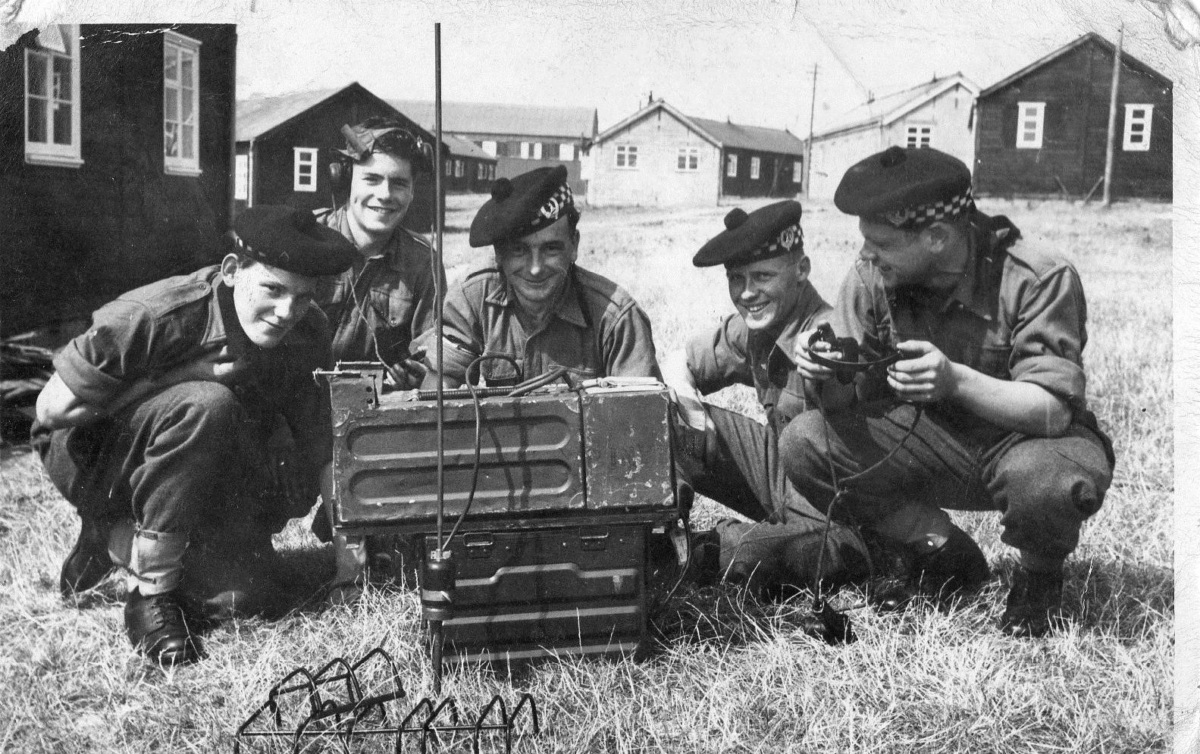
Old George was a very good skier having learned to ski with the Lovat Scouts in the Canadian Rockies. He would go up the hill in the winter on skis going through the cattle creep which I wrote about earlier.
There was a T.A. camp that we were at, around 1957-58, when I made friends with a lad from Benbecula. On the long twenty-plus hours journey he asked me if I would help him phone home as he did not know how to work the box telephone. At that time phones were a novelty on the Island as they were in many homes at time in the Highlands. The only way to phone in and out of the Island was to through the Island’s post office where the person who was to receive the call would go to the post office and wait for the call. In Tomatin we did this by getting the caller to phone the phone box.
When we got to the camp I went with him to the phone box. So that he could phone home I explained how the phone worked. It was one with an A button and a B button where you had to dial the operator and ask to be connected to the receiver and then put the money in the box. All went well, he gave the operator the phone number and she told that the call would cost him one shilling and six pence. I told him to put the pennies in first so when he put the first one in he then said to the operator “that one is in – did you get it” at which I fell about laughing but when one thinks in this day of mobile phones that this could happen in my lifetime is unbelievable.
The next house was ‘Sandside’. Donald Noble and his wife Peggy stayed there. He was a retired farmer from Aviemore who, before he went to Aviemore, farmed at Free Farm before the Distillery took it over. There was a toll-gate somewhere near the Gamekeeper’s Cottage and when it was no longer used as a toll gate, Donald Noble took it to Free Farm to be used as a farm gate there.
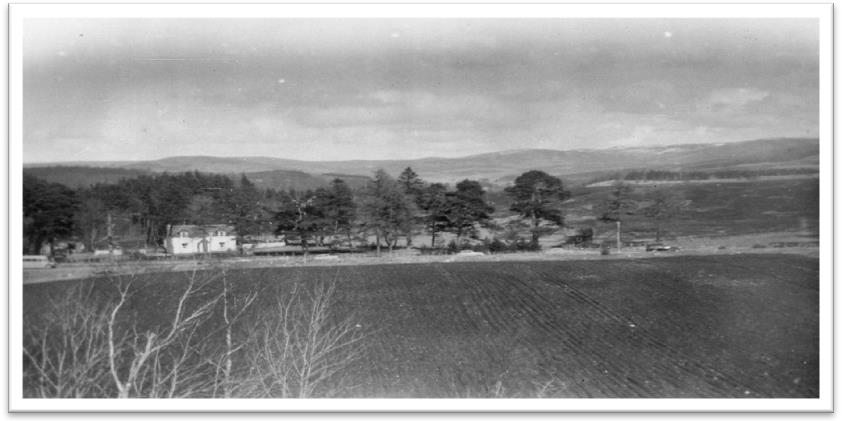
The next house was Mo-Dhachaidh where Bill Kelly, who came over to Scotland during the war with the Newfoundland Overseas Forestry Unit, ran his haulage and lumber business. The haulage business was later expanded by his son Freddy, building it into a large business with a big fleet of lorries working all over Britain Their daughter Anne married David ‘Mac’ McKerrow and they lived in Inverness but moved to Edinburgh twenty five years ago and they have two daughters Kelly and Rachel.
Freddy was my best man when I got married in 1965. Sadly Freddy died young. He was a real gentleman and a true friend to all that knew him and a very proud resident of Tomatin. Freddy was a foster cousin but he was something more than a relative. He was the best mate that anyone could wish for. It was great to go back to Tomatin to meet and reminiscence about the old times with him, we had so much to talk about and so little friends left to share the past with.
Freddy married Marion Colquhoun who came to work as a waitress at the Freeburn Hotel and they had a son Neil who became a lawyer and practised in Glasgow. Sadly Marion and Freddy separated and I’m unable to say where she now lives such is the case when you move from your home village you lose contact with the whereabouts of the people that once lived there
Kate Kelly, Freddy’s mother, was the younger sister of my Foster Mother. It was her brother Lal, who built Mo-Dhachaidh to take his new bride home to, then sold it to his father so he could finance the taking on of the farm lease of Drumbain where he farmed at the same time as working on the railway.
There was a little wooden building next to Kelly’s. This was the golf club house where there was a six-hole golf course, made about 1900. It was not big but very hard as the rough was heather. I can remember Kate Kelly being Ladies Champion and also that she was left handed. Toot Campbell was the Men’s Champion. This was also where the side shows came for two or three days every year after the Nairn Games which was an exciting time for all, young and old, with swing boats, shooting, dodgems and all sorts of fun at the fair.
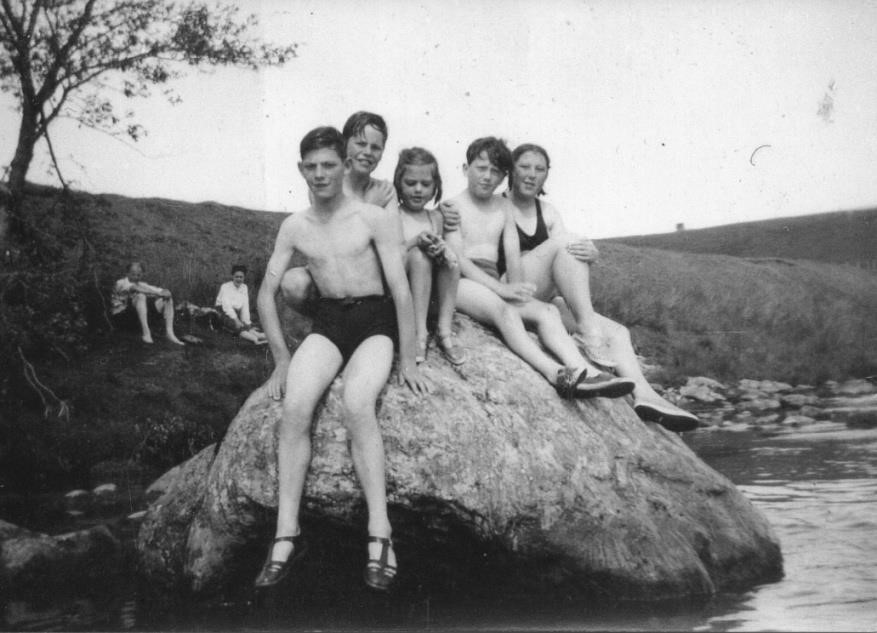
The next residence was the Heights farm which was part of Tomatin House Estate where the MacLean family lived. There was a dairy there that sold milk after Morile Farm stopped being a dairy. The MacLean’s had a daughter Janet who married a local lad Ian Cameron but sadly Janet died young.
The next house was opposite the Post Office which was the house that was built for the district nurse. Next to that was Bailan-Duin which was traditionally the home of the Distillery’s Head Cooper. There were many residents as the Head Cooper of the Distillery was a job that changed employees often. However the best known one was George Grant who was the projectionist and ran the weekly film show at the Hall during the winter months. Anyone who has seen old films may remember how they would sometime break down. All the children sat down in the front seats and when this happened, the kids would all cheer and stamp their feet until the film came back on.
The Village Hall was just across the fence and it was here where the films, concerts, dances W.R.I., boy scouts, girl guides, T.A, boxing and many other activities were held. There was one time when the W.R.I. had a meeting in the hall and Alistair and myself and some of the boys from the Distillery went up on to the stone viaduct and started to throw stones on to the corrugated iron roof of the hall. Mrs Hoare was giving a talk and the attendees of the meeting came out and told us to go away or words to that effect. As soon as they went back in we started again and out they came again and walked around the hall looking for the culprits. We were up on the viaduct laughing our heads off until we saw Mrs Hoare go to the other side of the viaduct and into the phone box to phone the police. We all went home and went to bed and when Mother came home from the meeting we heard her tell Father what had happened at the meeting and asking what time we went to our beds. ‘Oh” he said thinking ‘They’ve been in bed for hours’. So that was us being vandals in the 1950’s.
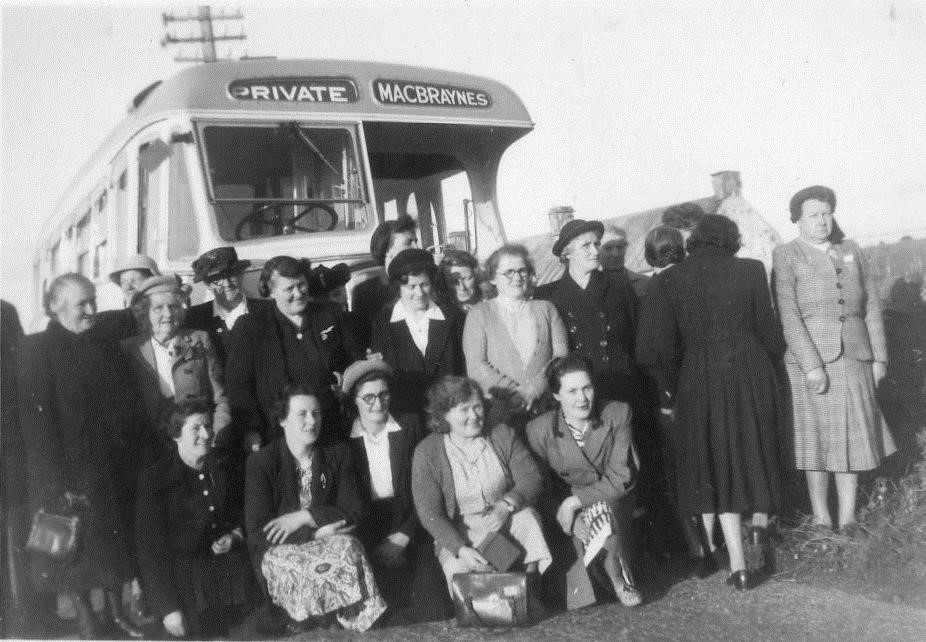
The hall was built in the typical village hall style, painted in green the entrance was through a small porch where men hung their coats before turning left into the hall itself. There would be a table just inside the door where the door keeper sat with a biscuit tin on the table. This was where you paid your entry fee. The interior of the hall walls were tongue and grooved varnished wood, the stage was straight ahead at the far end where the band sat and played’. Dances were always by a live band.
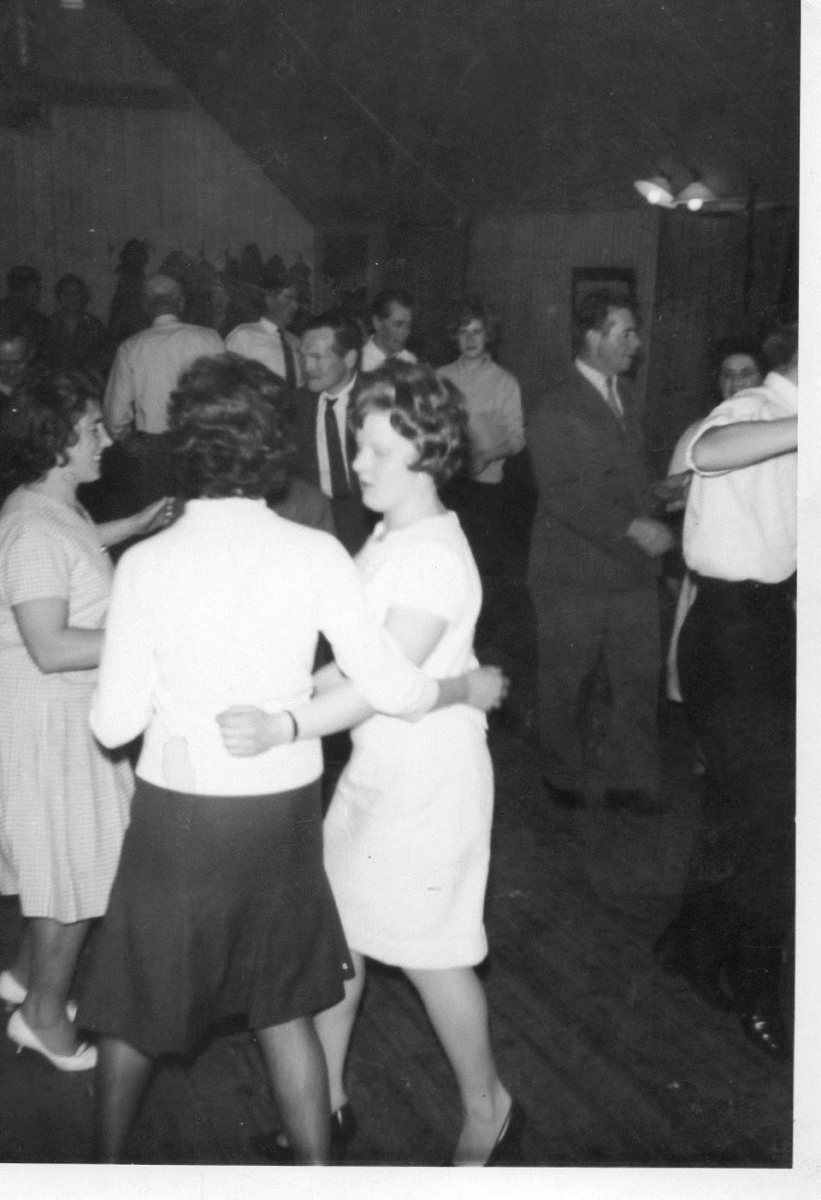
Roy Murray, Hound dog, Sandy Gall. Diane Christie, Charlie Cameron and Mrs Gall
The stage was also where the acts were performed for the concerts with the dressing room behind the stage which doubled up as the ladies clock-room on the night of a dance. For concerts the chairs were placed in rows on the floor, facing the stage. On the night of the film shows the chairs were reversed for the film to be viewed on the back wall where the screen was put up. To the left was the ante-room where the chairs were stored.
On the night of a dance chairs were laid out in a single row to sit between dances. At the left side of the ante-room was the kitchen where the ladies of the committee that were running the dance, whist drive, concert, or whatever else the hall was used for on the night, made tea which was free at half time. First they came round with a big box of cups, then the tea pot which was a big gallon kettle, then they had sandwiches and home-baked cakes. If there was a big crowd tables would be set up in the ante-room for tea. A Basket whist drive was a great night out. If you were asked to a table the ladies would all try to outdo each other with their baking skills.
Around the walls were hung a set of prints. There were six in all and they were of highland cattle on the drove. When the hall was taken down I managed to salvage one of the prints which still hangs on my hall wall. Another thing that went on at a dance back in those days was that the bar had to close at 9.30pm by law. So on the night of a dance the men would take a carry-out of screw-tops or a half bottle or a gill of whisky and this would be hid round the back of the hall as no alcohol could be consumed in the hall, resulting in the lads going out to drink as the night went on.
Another Head Cooper who I remembered living at Bailan-Duan and who shall remain nameless, had perfected an almost fool-proof way of smuggling whisky from the Distillery. As I said earlier, the distillery had a dairy that supplied milk to the workers. The Distillery day shift started work at six o’clock and then stopped for breakfast at eight until nine. Most of the boys went home, but this person stayed and went up to the dairy for the milk which he drank with his breakfast. He then filled the pail with raw whisky this he took home at lunch time every day amounting to 24 pints a week. His wife ran a Temperance hotel in Buckie and at the weekend he would take the lot down to the hotel which would be around 3 gallons of raw whisky. They may never have been caught if it had not been for their greed for when the Buckie police caught two Norwegian sailors drunk they found out that they got the drink at the Temperance Hotel and then the whole story came out.
On the other side of the stone viaduct was the phone box and next on the left was the ‘Tin Church’. This was the Church of Scotland’s Church where Sunday service and Sunday School was held.
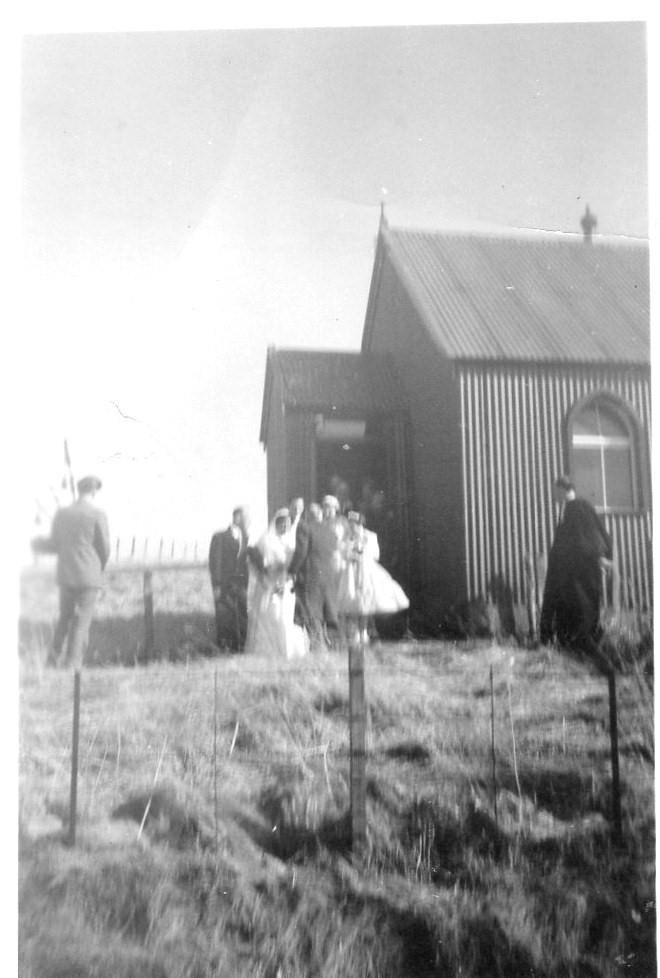
Every Sunday we had to dress in our best. The women wore hats as no woman would think of going to church with her head uncovered. There was no question of not going to church for if you did not appear at the Church on Sunday there was trouble when you went to school on the Monday for not being there. The Church was also used for weddings but as there was no graveyard within the Church grounds. Any funeral that had to take place in the district was conducted from the home of the deceased person’s and the coffin was then taken to be interned at either Moy or Dalarossie Churchyard. In the days before motor transport the coffin would be carried there by the pall-bearers changing each bearer as they walked on, the coffin had not to touch the earth until it was placed on consecrated ground.
On the right was Ard farm, home of Tommy ‘Ard’ or Tommy the coal as he was known and his brothers Davy and Donny ‘Ard’ and their sister Annie ‘Ard’. They were all called after the farm name which was quite common in those days and they all lived together and none of them ever got married. They never seemed to do much work except for Tommy who, if not out on his coal round, was carting to the Distillery. Davy or Donny always seemed to be standing on guard at the top of the bank above the shop in case someone should pass by without them seeing who passed on the road or went to the shop just across the road from the farm and they missed a bit of gossip Their real name was Fraser and they liked nothing better to interrogate any one that passed by… “Where are you going?, What for?, Will you be long there?, What’s in the bag?” They never missed a trick to get to know someone else’s business.
Across the road was the Shop where everything was sold loose – flour, sugar, tea, oat meal, and sweets for instance were all weighed and put into paper bags and sold. Time was of no importance and there was even a chair in the shop for the customers to sit and wait their turn and get all the gossip of the day.
Everything was on display in the shop except the odd half dozen eggs which were rationed unless you were a good customer and could keep your mouth shut then you might have got some from under the counter. It was magical place for a wee boy to see the shelves full of big jars of different kinds of sweets that could be bought. One or two of this or that was the original pick and mix that were weighed into a small poke. Sometimes the poke would burst and the sweets would become lost in your pocket as they were not wrapped in any individual kind of paper. After a day in school rolling around in your pocket out of the poke, they became stuck to the inside of your pocket so you just turned the pocket outside in to get at the sweet, suck the fluff off it and spit it out and carry on sucking the sweet.
Mrs Walker was the proprietor of the shop and there was never a beer or lemonade bottle lying about when we were kids, as we got three old pence for every bottle that was returned also one penny for a two pound jam jar and a half pence for a one pound jar. As a bar of McGowans toffee cost three old pennies (one and a half new pence) this way of recycling worked well. The shop was also where paraffin was sold as there was no electric light in those days and paraffin was the main source of lighting. The shop also sold petrol and the pump was across the road from the shop. It was just a single pump that had to be worked by hand one turn was a gallon then it had to be turned back to pump again for the next gallon.
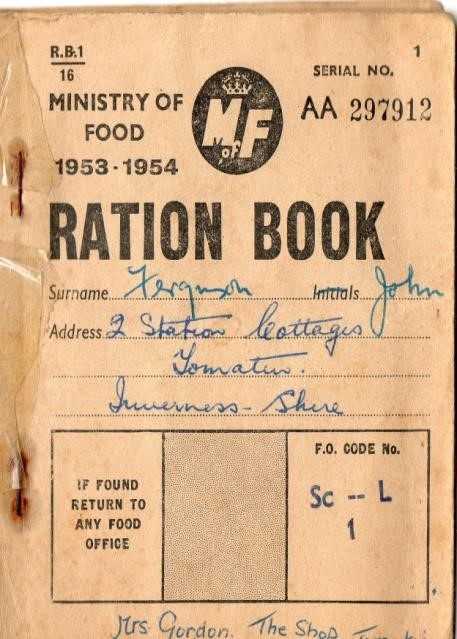
The shop was where the bus left and collected local route parcels. Macrae and Dick was the bus company and ‘Bob the Bus’ was the driver. He knew everyone in the district there for he knew where everyone stayed. Another thing that the bus delivered was maybe someone’s weekly groceries or a bit for a farm implement, even medicines were all sent by the bus and nothing was wrongly delivered. Every day the milk for the school all went by bus to the shop.
Then Mrs Walker gave up the running of the shop. The new proprietor was a Mrs Gordon and her husband, he never served in the shop, he only filled the paraffin cans and sometimes served petrol. They were very strict ‘Wee Frees’. I remember once when they fitted a chewing gum dispenser outside the shop. That Sunday we all went to the shop and emptied the machine by buying up all the chewing gum. The next week they emptied all the gum from the machine on Saturday nights so we youths would not buy any on a Sunday.
Shop Brae
At the bottom of the shop brae there was a sand quarry where hundreds of sand martins nested. I can remember on the way to and from school in the summer time they would be flying around like bees around a hive. It was here where the sand (no salt was used) was quarried for sanding the roads in the winter. Just pure sand so therefore there was no rust on the few cars which were on the road in those days. Next was the Hazel Wood or Primrose Wood – so called as it was a carpet of yellow in the spring with this little flower. It was also here that I went to get my fishing rod as it was in this wood that all the best sticks were to be found.
On the right where the shop burn runs into the Findhorn it was here where the tinkers used to camp. The camp was quite a colourful sight with their round tents and different coloured ponies big open fires and bairns running around with no clothes on. One day when I came home from school Mother said that one of the travelling women had been at the door asking for “a wee bit of butter for the bairn’s arse as he skinned it riding the cuddy (pony)”. When mother said that she had no butter and asked if margarine would do the answer was no, as margarine was too greasy. It was just another way to con her in to giving her butter for bread. This is another way of life that has gone although with the ‘tinkers’ about this would be the only time when the doors of the houses in the district would be locked. It is still a lost way of life. The arrival of the Tinkers to the village brought a certain kind of excitement, as they walked along the road with their string of ponies and their carts loaded with their tents and all their goods. The locals would wondered if so and so would be back or if they would have those good clothes-pegs that they had the last time or could they sort that saucepan with the hole in it?
The next land mark on the road to school and the most outstanding was the steel viaduct over the river Findhorn. This massive structure is 445yards long and 143 feet above the river and was constructed on the curve of a half mile radius, a great feat of Victorian engineering.
Under the steel viaduct we would meet ‘Willy the post’ on his bicycle as he cycled on his way to get his van. He always had the same answer when we asked him the time which was ‘half past nine, hang your bloomers on the line’.
The next house was at the other end of Tomatin House drive and this was Wades Cottage. The drive went from the Gamekeepers cottage on the old A9 past Tomatin House at the midway point and then through to Wades cottage on the Balvraid road. This was where George Grant lived when he worked as chauffeur/handyman for Colonel Bullock before moving to Bailan-Duin to become Head Cooper at Tomatin Distillery.
Wades cottage was on the old Wades road which started between the first and second green of the old golf course carrying on up the middle of the course and splitting it in two over the top off the hill, to about where ‘Prince Charlie’s stone’ is. From there I am not sure where it goes until Wade’s cottage where it goes to the Findhorn River. Looking down river of the present school bridge – when I was in school, when the water was low then the wooden stumps could be seen in the river which I took to be where the uprights of the original Wade’s bridge would have been. From there, the Wade’s road went behind Raigbeg School and round the back of the Soilshan Wood following the old road until opposite the Clune road there is a track that crosses the A9 below Drumbain across the burn by a small wooden bridge the track continues under the railway by a small cattle creep. There you may see the ruins of a small crofting community by the name of Raigmore.
I remember Jimmy Dunbar telling the story of a man called John Willox or Macgregor who had a tack of Raigmore in the early 1700’s (someone who had a tack on a piece of land was like a second landlord. He paid the rent for a crofting community or ‘farm toun’ to the land owner. He was then responsible for collecting the rent from the community either as money, farm produce, or free employment depending on the size of the land that was rented). John was the grandfather of Gregor Willox who was known in the 1800’s as Willox the Warlock of Wester Gaulrig, Strathavon, above Tomintoul.
The story that Jimmy Dunbar told went something like this. One day when old John Willox MacGregor was walking over the Slochd when he saw a horse at the side of the road which he recognised as a water kelpie in the guise of a horse. The kelpie was a cunning spirit and had plans to kidnap Mr Willox just as he did with many other poor souls before. By disguising himself as a stray horse and waiting until the victim had mounted him he would then ride off to his home in Loch-an-Dorb, a loch between Grantown-on-Spey and Forres where he tortured his victims and had fun with them before killing them. Willox had other thoughts on his mind as he approached the beast for he knew that this was no stray horse but a kelpie or water spirit. As he marched up to the kelpie it lowered its head to allow its victim to mount him. However instead of John Willox mounting the horse he took his sword and hit the kelpie between the eyes knocking it out and causing a piece of its bridle to fall off which John Willox picked up and ran off in the direction of his house.
The kelpie regaining consciousness and ran after Willox shouting at him “you’ll never cross your door step with the bridle”. On reaching his house Willox found his doorway barred by the kelpie who used trickery to gain the house first. However instead trying to get past the beast he ran round the back of the house shouting to his wife to come to the window and hold out her apron which she did. He then threw the bridle into the apron. He and the bridle were then safe from the kelpie who could not now cross the threshold because the family had placed a rowan cross above the door to ward off evil spirits. When the kelpie saw this it gave a mighty roar and disappeared and was never seen by humans again, not even at Lochan-Dorb. It was this piece of bridle along with a crystal that was supposed to have given his grandson his powers of his witchcraft. The legend has it that it was not only witchcraft that gave Willox his power, but also religion for he ended his service with the words, in the name of the father the son and the holy -ghost.
This was another one of the stories that Jimmy Dunbar told and how I wish that there were such things as tape recorders in the 1940’s which could have recorded his many stories for the benefit of future generations. From Raigmore the old Wades road went on up to the Slochd and from there on I do not know where it went.
After George Grant I remember ‘Toot’ Campbell came to live in Wades Cottage. Toot worked as a signalman at Tomatin station. His son Douglas still works in Tomatin Distillery so I apologise to Douglas for calling his father by his nick-name but it is with affection that I remember him as he was known to me.
Tomatin House was extensively burnt in the early 1950’s. The Distillery fire engine was one of the first rescue vehicles on the scene. Thankfully no one was hurt although it was no thanks to Distillery fire engine whose hoses kept falling off as the fire engine bumped down the road behind the old Land-Rover. They had to keep stopping to pick the hoses up and when they reached the House and rolled out the hoses the water spouted out all over the place due to the holes that were in the hoses. The House was rebuilt to its former glory and is still the home of Ann Glynne-Percy who is the daughter of the late Colonel Bullock.
On to the little bridge across the Findhorn river which we knew as the ‘School Bridge’ I remember George Buchan cycling a push bike across the parapet of the bridge! At the other side of the bridge there is a monument that was built by my Mother’s father, Alexander MacDonald of Balvraid farm, on behalf of the people of Tomatin for the Reverend E.L. Brown, the owner of Glen Kirk house and the grouse shooting on the Glen Kirk Estate, for the support and generosity he provided to the village. Gwen Grant said that there is an Oxo tin built into the monument with the names of the people who donated to the monument.
Going home from school we would sometime take the short cut home, straight up the brae at Wades Cottage then through the cut wood which was cut during the war leaving most of the trees cut about waist height. I was told that this was to save the wood cutters from bending down too far. At the top of the brae, before the golf course, there was what was called Prince Charlie’s stone with its seat-like shape and a hole where a drink could be put in. Here I would sit and pretend to be the bold prince fighting the English and sitting on this special stone planning their defeat and changing history.
As I grew older and saw and read things about the customs of this wonderful country that I live in I now realise that this may have been a coffin stone. The stone may well have been a place where mourners would have rested the coffin on the way to the church yard at Moy. Once the coffin was started on its journey it was not allowed to touch the earth until it was placed into the grave at the cemetery. This is why on walks through the hills along the hill tracks from outlying crofts to a churchyard you may see mounds of stones or an occasional big rock which were recognised places to rest a coffin and it’s bearers on their way to the last resting place of the deceased.
However I have strayed from my journey through Tomatin as often happened on my way home from school. That was the trouble when you had so much to see and do on the short cut home. From Prince Charlie’s stone it was down past the golf course, past the Heights and down through the fields past the Blacksmith and on home. Sometimes at the top the brae above Wade’s Cottage we would turn left and go down the track through the viaduct along by the top of the Hazel Wood and then back out at the shop. If the ‘Ards’ had turnips growing in their fields we would have the added bonus of something to eat. A shortcut would take twice the time as there was so much to see and do what with bird nests to find, rabbits to chase and turnips to eat and so on.
Inverbrough, Balvraid and Corrybrough
After crossing the School Bridge, turn left along the Balvraid road and on the left the first building is Balnespick Lodge where Brigadier and Mrs Grant lived. They had a son who was also an army man known to us as ‘Colonel Donnie’. Further on there is a track going to the left and this crossed the Balvraid burn to ‘Inverbrough’ where Mr and Mrs Bob Dunbar farmed the Inverbrough Farm. Father dug the water track for the water when it was put into the house and I remember Kathleen and I going over with him to help put the stones into the track. I can also remember being in the house at Inverbrough at dinner time when a bell on the wall rang. It was one of those kind that was on the end of a spring. Bob immediately went outside and about ten minutes later came in with a big trout. It turned out that Bob had set a fishing line from the house to the river and that this was attached to the bell in the house.
Further down the Findhorn there was another Inverbrough where a brother and sister had the croft. John and Ann were their names but I cannot remember their surname. In fact I cannot remember too much about them except that they once had to have hay flown in and dropped by a Hercules aeroplane to feed their sheep one very bad winter when they ran out of winter feed. I think it was 1953 as I can only remember that it was a very bad storm that year. Before you went through the gate to go to Inverbrough there was a wooden horse-drawn caravan that was a home for ‘Willy the Post’. It was from here that he cycled every day, to collect the Post van garaged in a small garage at the Station. If the roads were blocked by snow, then he would have to walk to the station to get the Post van ready to start his round. Once he finished work he would cycle or walk home again to make his dinner before going to bed ready to start again the next morning.
Back onto the Balvraid road next on the left was Balmore. This was where ‘Jackie the Post’ came to stay with his wife Molly and their son David (Digger) when they first returned to Tomatin and Jackie became the new postman after ‘Willy the Post’. It was from here that Molly took David to school before they moved to the village when the council houses were built. It is thanks to ‘Digger’ Noble that Tomatin got a new hall as he worked tirelessly to raise funds for the new hall that was built across the road from Neacrath. He ran darts matches, raffles and even dances in Aviemore Hall in order to get the bigger crowd – and all this when he was just a teenager himself. ‘Digger’ went away to the R.A.F. and later joined the paratroops with the R.A.F. Sadly he also died young – such a loss as he was one great guy.
Across the Balvraid burn was the croft of Edinchat and it was here that the great story teller Jimmy Dunbar farmed sheep. This was the family farm where he was born and from there the family moved to Invereen on the Moy side of the Church of Scotland manse. I remember Jimmy telling a tale of when he was a boy at Invereen. There was a grave of a Highlander who died of his wounds making his way home from the Battle of Culloden Moor. The soldier was buried by the side of a field at Invereen and that corner of the field was never ploughed and furthermore he was told by his father never to touch it. However, one day when his father was away and after he had been told to plough the field he came near to the spot where the grave was.
He ploughed too close to the grave putting the plough through the grave and turning up the bones. When his father came home he got hell and had to spend the night reburying the bones in a six foot grave. I believe that thanks to Donny MacCaskill there is now a cairn on the spot where the grave is.
The last place on the left was Balvraid Farm and it was here that my Foster Mother’s father and mother, Alexander and Margaret, brought up a family of ten. Donnie and Jimmy both went to Australia in the 1920’s leaving Willy, Ian, Lal, Boxie, Anna, Beta, Sattie and Kate. In my time Boxie worked the farm and he also worked on the railway. I remember in the winter of 1954, walking with him from the Station cottages to Balvraid (after he had been working on night shift on snow duty) to help him with the lambing. That year the snow was so deep that the road men had to dig a track from the Gardeners cottage to Balvraid so that Bill Kelly with his Studebaker lorry and snowplough could have room to burst through the shoulder-high snow. Up and across the Balvraid burn which had the Gaelic name of Allt Bhrothaich was the croft which went out on to the heather and was part of Balvraid Farm in addition to the small estate of Glen Kirk.
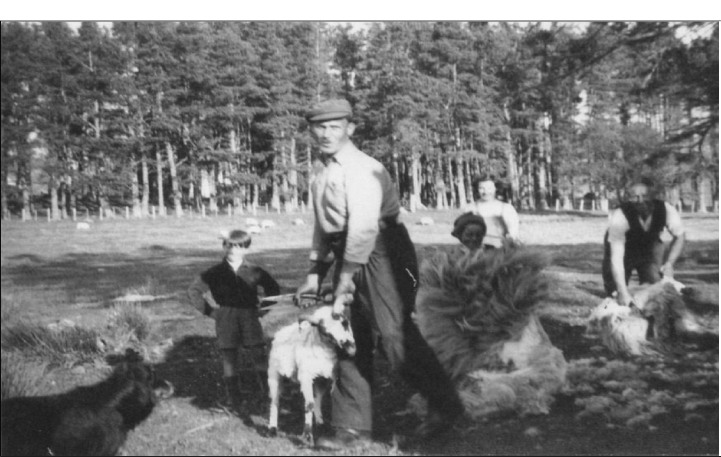
It was to Balvraid Farm Cottage that Boxie’s wife Christine took their twin boys Andrew and Ian home to as babies. Later they moved to Old Mill Road to live more centrally in the village while they still worked the farm of Balvraid. My first memory of Balvraid was going there when old Granddad Alexander MacDonald was living there. He was a great one for his different kinds of pigeons and liked nothing better than to show them off to any one that wanted to see them. It was a great sight to see when he let them fly, tumblers, fantails and all colours. The tumblers were my favourite as they flew high then came twisting and tumbling back down.
Turning back down the other side of the road the first building was Balvraid Lodge which was the home of Colonel Mackintosh and his wife Mary. They had three daughters – Mary, who was a great fisher and the twins Colina and Ann.
Pat Grant was the Laird of Balnespick. He was badly wounded during the Second World War and when he returned home he stayed firstly for some time at the Freeburn Hotel. Then when the Morrison’s gave up Croft Dhu he had the croft house done up and moved in there before moving into Balvraid Lodge and marrying Susan. After the Mackintoshs’ gave up the lease of the Lodge it was leased along with the shooting. Pat was a great man to be with and I could see him as a great officer for he wouldn’t ask anyone to do anything he couldn’t do himself. Pat had a tremendous physical strength and sense of humour. I once sent a drawing to Jimmy Geddes regarding a fox that escaped from them while sitting out at a den all night up at the ‘Cross Burns’ which Pat replied to with a humorous letter from the ‘Balnespick Fox Hunt’. I still have the letter. Pat also had the biggest hands that I have ever seen on any man. At the clipping of his sheep, although he did not shear himself he worked at the hardest job of all – dragging the sheep. However he would carry a sheep in each hand and run with them. As the saying goes ‘a true officer and a gentleman’. I remember the first time that I ever met Pat Grant was when I was walking home past the shop when this old Land Rover stopped and he leaned out and asked who I was. When I told him he gave me two white hares to take home, he was kind to a fault.
The next cottage was the Gardener’s Cottage which was later to become the Gamekeeper’s Cottage. It was here that later my very good friend Jimmy Geddes stayed with his wife Bella and their children, Margaret, Jimmy, Joan and Michael. Jimmy was in the T.A. with me and was a very good shot. It was with him that I first learned to shoot at the white hares up on the Corrie Mhor which was where a British plane went down with the loss of almost all the crew. A night that Kate Kelly remembers as a young girl at Balvraid Farm where she lived when she was a teenager, witnessed the sound of the crash and the activities that took place at the time and after. The wreckage was scattered all around the hillside.
Another thing that Jimmy Geddes and I would do was catch wild goat kids, castrate them, lug-mark them and let them go again. When the goats had been with their mother until about September or October, we would catch them again and slaughter them, just as was done with lamb. Back in the 1950’s and 1960’s wild goats were a common sight from Balnespick to the Slochd.
They were a truly wild animal and like no other goat as they had long shaggy coats often down to the ground. The Billy’s had such big horns, sometimes three or four feet long. The conservation group did not consider them as wild animals and so there was no protection for them as a result they were wiped out . When sixty goats were rounded up from the hills of Slochd the SSPCA said in a newspaper report from their Edinburgh headquarters, and I quote “We are aware what is going on. We are totally opposed to this and hope there is enough public reaction to have it stopped before this entire herd disappears”. Well, sadly this has happened and the wild goats of Slochd have all gone and we shall not see again the little kids dancing around the rocks below the ‘German’s Head’. Imagine the hue and cry if this was some bird of prey that was found shot. The current conservation group would be calling for the book to be thrown at the guilty party.
It was to Jimmy and Bella’s house that I would walk every New Year to first-foot them both, sometimes not getting there until 3 or 4am in the morning. They would always wait up for me knowing that I would not let them down and there would always be a dram or three, plenty of home baking, a big roaring fire and best of all, good company. There was one year that I been to first-foot them then walked the four miles back to the Distillery to start work on the day shift at six o’clock that morning. There were no days off and if you were on shift you had to be there, even if it meant going to work, as I often did, in my suit.
The next house was up on the brae above Balnespick Lodge. This was the original Gamekeeper’s Cottage. Tom Jack, who was the officer in charge of the Home Guard guarding the local railway viaducts during the war, he was the Gamekeeper for Balnespick Estate and when he retired he was given the cottage rent-free for life.
Down the road was the farm of Croft Dhu and this was farmed by the Morrison family Agnes, Rachael, John, Sandy and Hector. Sandy and Hector were both good Gaelic singers and were part of the Tomatin concert party.
At the bottom of the Croft Dhu brae there is a drive which takes you up to Corrybrough Lodge, the farm buildings and workers cottages. There was also a Farm Cottage and Burnside Cottage which was up the burn to the right as you walked up the drive. ‘Burnside’ was where Jack Noble stayed with his family. Jack worked on the road and he always had a cheery shout from the back of Kelly’s lorry as they sanded winter roads throwing sand out the back of the lorry with a shovel.
At Corrybrough there was a family called Storey. He was a small man and his wife was quite a large German woman they had a very good looking daughter called Rosa. Mr Storey worked as the gardener .After his wife died he moved up the glen to an old cottage which he named Woodbine Cottage this was later burnt down for a children’s TV film which I think was called ‘Maggie’.
There was a farm manager at Corrybrough called Mr Fraser. I remember he came to the Freeburn Farm to castrate the calves when I worked there , I also remember old John MacDonald taking a bottle of clear whisky down to the farm for Mr Fraser to sterilize the knife after each cut he made when he was castrating the calf. I would have no doubt that he would have had a glass or two of the good stuff after the job was finished.
Raigbeg and Soilshan
Back to the monument at the school bridge then up the brae was Raigbeg Primary School where they tried to educate me before going on to Inverness High School. Outside of the school there was a high wall which we liked to run on top of. I don’t remember any one falling off it. There were two outside toilets one for the girls, one for the boys. They were dry toilets and as a punishment the older boys would be sent to dig a hole to bury the continence. There also was a corrugated iron and wooden building with a wooden plank around the inside to form a bench. The building was open on one side where we sheltered when we sat and ate our lunch in all weather rain or snow, as we were not allowed in to the school during breaks, this was before school lunches came into being, In the winter we would take our home-made sledges to school. They were all made out of wood with steel runners which were made from the thin metal strips that were found on the spring of the old cast iron bed. They were nailed to the wooden runner and the metal was then polished to a shine. You then had a very fast sledge! We would sledge down the school brae during our breaks which was a steep brae that we went very fast down the then over the Balvraid road turning onto the school bridge. Although there were few cars on the roads at that time there was still the odd vehicle such as the post van, the grocer’s van and other vans to watch out for. The bottom line was that no one was hurt and we had lots of fun.
The start of School ‘dinners’ was a great thing. To have somewhere warm and dry to eat your lunch was great but to eat a hot meal as well was the icing on the cake. The dinners were made and served in what was the domestic science building which was also a large corrugated iron building where the girls learned to sew and cook and other domestic skills.
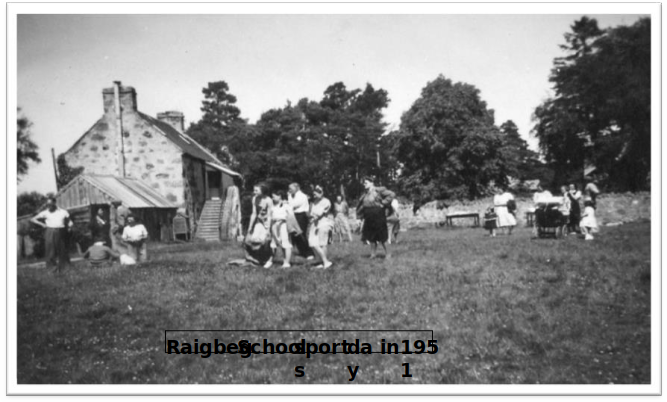
Elma Junor was the cook who made our school dinners and whenever she was asked what was for dinner she would say that it was frog’s eggs and tatties. Attached to the school was the headmaster’s house where Mr and Mrs Leslie lived. On a good summers day we would go out and work in his garden while Mrs Lesley taught the girls sewing and knitting while the wee ones made daisy chains on the lawn.
Outside the school wall the first house was where ‘Deed MacKenzie and his wife lived. Mrs MacKenzie was the first person that I knew to have died of cancer. They had a daughter Heather who lost a lot of time out of school looking after her mum and her younger brother and sister.
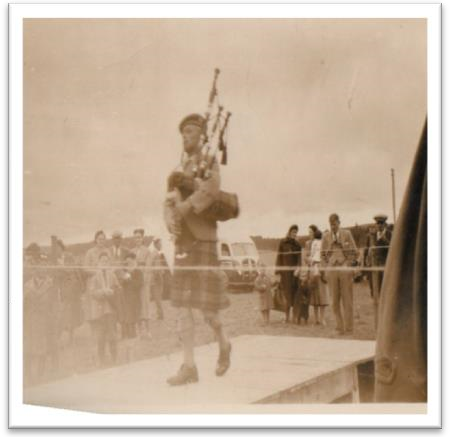
Across from that house was a two storey building and in ground floor of the building lived old Mrs Grant. It is her face that is on the front of most old photos at that time. There were stone stairs going up the outside and on a good day we children went sometimes at lunch break. Miss Annie Ross lived upstairs with her invalid mother. She had a lot of trick boxes which she took a great delight in showing us how they worked when we went up to see her.
There was a large grass park between the School and Dalnahoin where the school sports were held as well as village picnics such as the Coronation party. It was also the football pitch for the school. Behind Deed’s house was Archers Cottage where Rod and Mrs Cameron stayed. Their son Ian married Janet MacLean as I mentioned earlier. There was an incident that happened when Mrs Cameron was moving to the village council houses. She had a three-wheeled line marker that she was giving away and she asked the children who wanted it? All the children shouted “me, me” while I in turn used my head and said “May have it please Mrs Cameron” and got it for my manners, not that I was any better than the rest, just that I quickly used the head.
Up the road on the right was Dalnahoin which was a popular place that we school children would go in the summer, when they were clipping the sheep or in modern terms – shearing. We would try to drag the sheep to the clippers but as I was so small I could sit on the sheep’s back and my feet wouldn’t touch the ground and often the sheep would take off with me hanging on to their wool. Many a skinned knee I got for my troubles but still I went back for more. In those days the old men would clip on stools which were long four- legged benches on which the shearer sat with his back against a wall or fence.
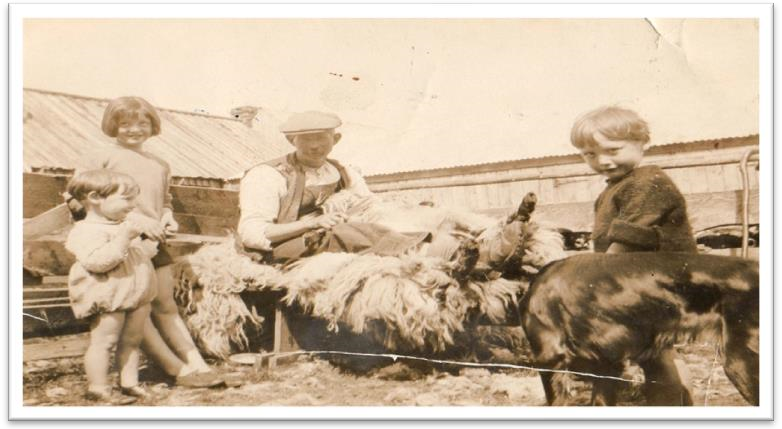
The legs of the sheep were tied before the wool was taken off. It was a slow business compared to today when it takes less than a minute to shear a sheep. There would be about 20 clippers in those days and time did not count as there was always time to stop for a dram, some tea and home baking and maybe a sleep after lunch.
There were two houses at Dalnahoin. The shepherd stayed in one and Gwen Grant’s (nee Thain) sister Nell and her husband Angus McRitchie lived in the other one. Angus worked on the railway as a signalman and was an avid reader of Zen Gray western books. The next land mark was the railway viaduct. It was a huge steel structure with big stone pillars and this was the viaduct that old Jake went down for a dare one night. It was also through the river span that as a small boy in the school playground one lunch time that we heard and then saw a wartime Spitfire fighter aircraft fly through the bridge. It was all very exciting as by that time I had become used to aeroplanes flying low around Tomatin. Along the road to Soilshan there were three houses which all belonged to the Watt family. The first one was empty and the second was occupied by Betsy Watt. Betsy once offered me the first house when I got married. Unfortunately it needed too much work before it could be lived in and sadly I had to turn her down although she offered me the cottage for only £150 which was later sold for thousands after Betsy died. The third cottage was where her brother Wattie stayed. I don’t know if he was Wattie Watt or was called Wattie because of his second name.
He was just ‘Wattie the road-man’ to everyone that knew him. He would cycle to the pub every night then use the bike for balance as he walked on the road home.
Next was the Free Kirk manse then across the Drumbain burn onto the A9 down the brae on the right was where Roy Murray stayed with his two aunts Roy worked in the forestry and this was the same man that cut the peats with Father.
Across the road was the Free Kirk Church with the attached Mission House below it.