INDEX of Ann Glynne-Percy Essays
Ann Glynne-Percy, 2004
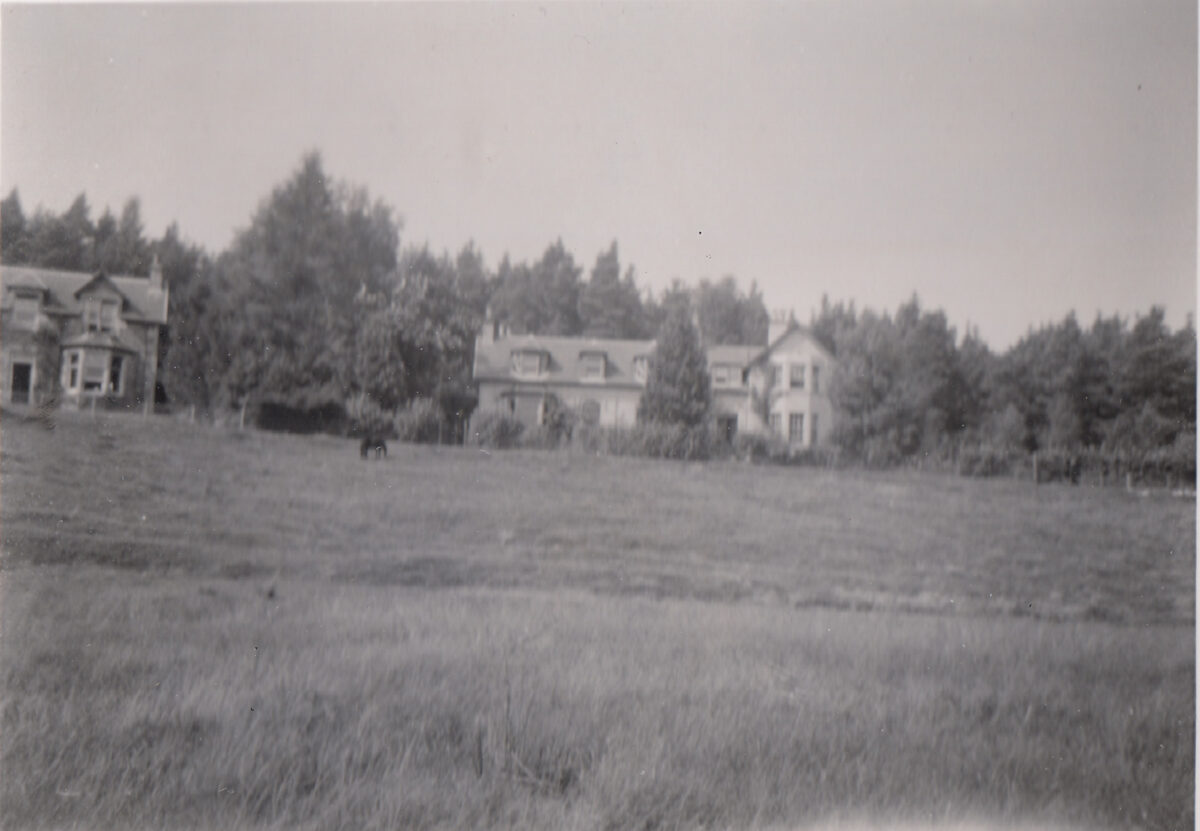
Apart from news bulletins, which the grown-ups never failed to listen to, my first realisation that something very momentous had occurred in September 1939 was the blackout. No cheerful lights from windows throughout Tomatin and the Strath, curtains firmly drawn at dusk, and dark material needed to shroud the more flimsy ones or, worse still, tottering on a ladder to paint skylights black. Welcoming lights at doors were no more and we put sticky plaster over any switches that might send illumination into the night, or took out the bulbs. This was all to confuse enemy planes seeking targets to bomb. The few vehicles on the road had special hooded shields over lamps or headlights so that they could not be seen from above; bicycle torches too were dimmed. As in town, large window panes were criss-crossed with adhesive tape, to lessen injury from broken glass, but no-one here had patio windows or conservatories to worry about in those days!
The only real air incident I recall — apart from the ‘friendly’ Whitley that sadly crashed on the Coire Mhor [read about it here (ed.)] — was from a German bomber over Moy. The pilot must have been looking for Inverness by the Moray Firth but, mistakenly saw the loch and let loose a stick of bombs before heading quickly back across the Channel. Fortunately no damage was done. My mother, Mrs Bulloch, and I cycled down to see what had happened but there were just craters in woodland, gashed trees and a rabbit casualty — mercifully different from the bombing raids elsewhere in the country.
Each household had their own ways of seeking shelter when we heard an unfamiliar engine note from planes at night. My mother and I sat in a downstairs passage at the back of the house, where there was no window, equipped with a torch, wireless and Thermos as well as rugs. She had her dog and I had my budgie in its cage. It unfortunately died as the war years went on because none of its food, millet and grains, were available. I tried drying grass seeds and kernels, to no avail. Canaries survived, being finches and able to manage as their local cousins the chaffinches and such did, on what could be garnered out of doors.
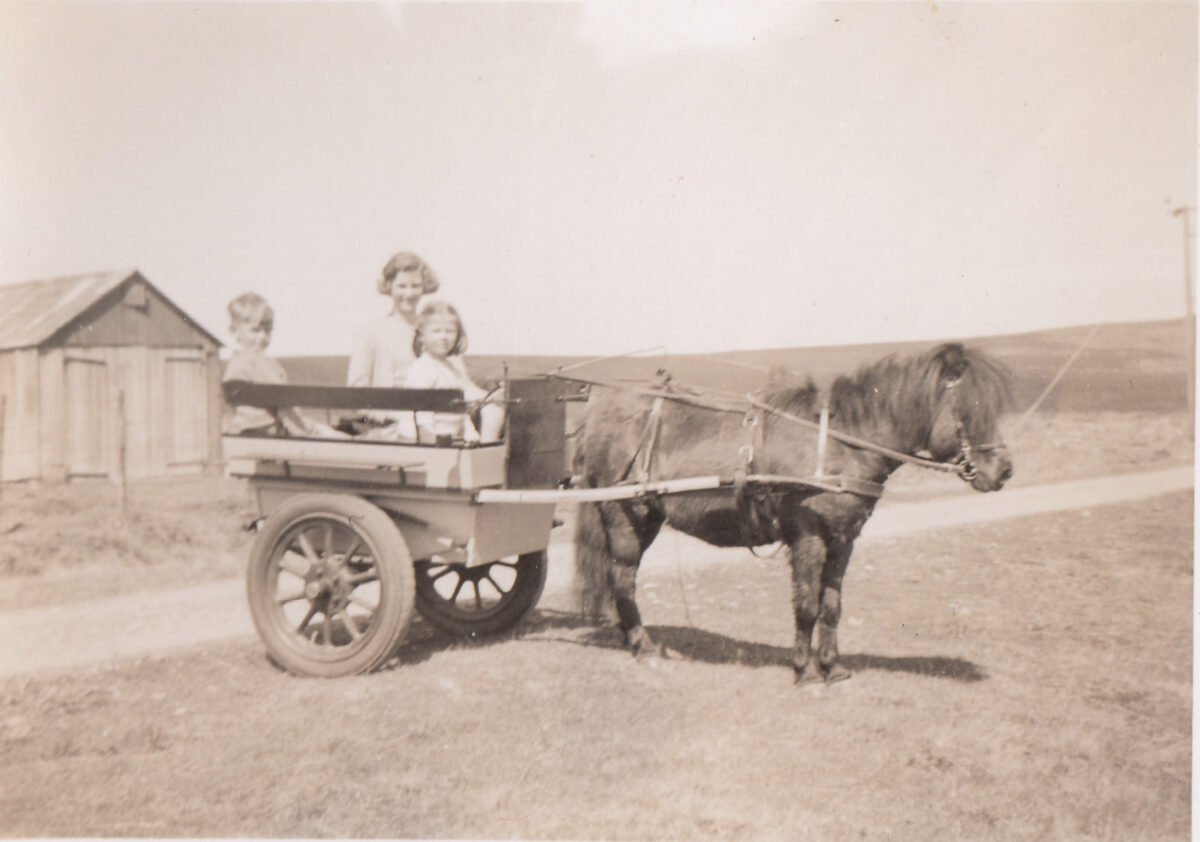
Dig for Victory was a major slogan, and many a flower bed or grassy area was given over to growing vegetables, but my main memory was at the peats. There was a good bank of the right consistency opened on the bog below Cottage of Free. and my mother and I learnt the various stages of providing our own fuel, in spite of the midges, as we turned the cut slabs to dry and stacked them through the summer. It was quite a haul up to the house from the bog but I had the ideal conveyance- a mini coup cart, pulled by Rusty my Shetland pony, which made an endurance exercise fun. She was more used to being driven in a trap and, with so little traffic on the main road, it was safe to enjoy going for messages or to visit my grandparents. The only vehicles I used to have to hold her head for was the huge long transporters of airplane parts, known as ‘Queen Mary’s’, which occasionally hammered by, or Army convoys.
Salvage was one of my holiday tasks to help the war effort. My mother had the loan of a large shed, ‘Meg’s Garage’, where Mrs Mitchell’s house is now, and everything contributed by the community was dumped there to be sorted and bagged — paper, rags, bones and glass. The bones stank horribly but were needed to be processed for glue (for air-frames?) and some rags were quite hilarious, old “foundation garments”, but all innocently anonymous. Paper was no problem except that in a childish way I collected stamps and was tempted by some of the more exotic ones on envelopes from abroad, including the Falkland Islands where the Henderson’s of Morile had relations. Letters were often opened and censored by ‘the powers that be’ in case any news of interest to the enemy was written, like troop trains passing, or the whereabouts of our Home Guard — those lines were blacked out before the envelope was resealed.
Scrap iron went away by wagon loads from the station. Any old metal, implements, bed ends and, regretfully, the railings from outside the Shop. which had topped the low wall around from the post box. The Old Mill machinery parts also went.
Youngsters were encouraged to pick rose hips. which were made into syrup rich in vitamin C, and I remember collecting sphagnum moss to spread out on old bed springs to dry. It was used for wound dressings because of its healing/iodine properties — Nature’s own cure used by injured animals, such as deer on the hill.
Local families with room to spare were asked to take in refugees from the bombing, mostly mothers and children from the Clydebank area. Some did come, but they found our way of life and the countryside so alien to what they were used to, most gradually went home. One woman said the soughing of the wind in the trees, the hooting of an owl or animal sounds at night was almost more scary than the bombs!
However, there was far from silence at the old Village Hall, beneath the stone viaduct — whist drives and concerts, and dances with music provided by local talent. There were occasions galore, film shows too, most to raise funds for our servicemen and women, the Red Cross for parcels for prisoners of war, and other good causes.
Less exuberant, but still vital, was the work of the Strathdearn Women’s Guild knitting woolen comforts, whatever was needed — socks, balaclavas and sea boot stockings. They also sewed, and made clothing, including pyjamas for the wounded convalescing at the old original “Nissan hut’ Raigmore Hospital, also garments for the orphanage.
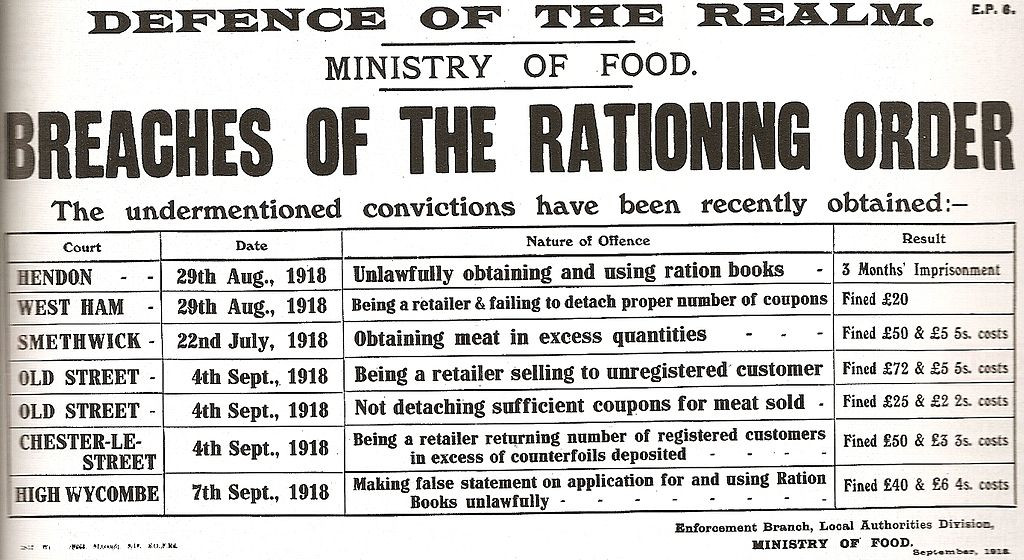
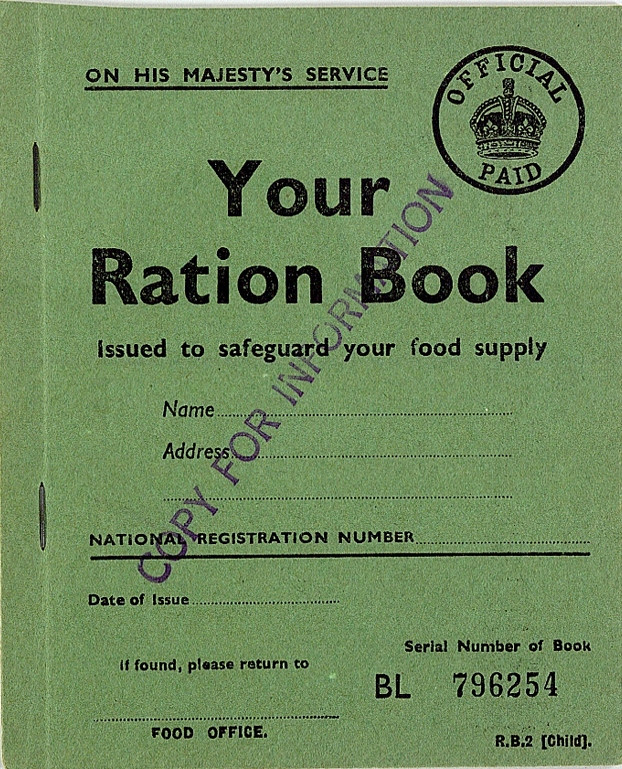
Coupons were needed for almost everything — clothes, food and petrol. There used to be a single pump across the road from the Shop and Mrs Walker, or latterly Mrs Gordon, used to go across to attend to customers. There was a dial like a clock face that told how many precious gallons had been delivered, by hand pumping to and fro. Meanwhile, those waiting at the counter had time to decide how to spend their ‘points’, these were in addition to our basic sugar, butter, cheese, lard and tea ration. You could choose tinned goods, sardines or spam, or syrup or treacle; fruit was an extravagance but a treat, and chocolate biscuits the greatest temptation of all. Butcher meat, but not offal, was rationed too and provided by the Misses MacKenzie from their premises by the Old Post Office. At the worst stage of the war each person had to take part of their ration in bully beef and, after many months, there came a time when even the cleverest mother might struggle to find a way to make it look and taste different, in spite of ‘inspiring’ recipes suggested in the papers!
We needed batteries for torches, lamps and the wireless — who could miss the jokes of ITMA, or Worker’s Playtime Requests or, real thrill, Dick Barton — Special Agent. The MacKenzie Brothers at the The Bicycle Shop (it was where David MacKay’s entrance is now) was the place to supply what was needed, and sweeties too. There were jars and boxes on the shelf, all with tempting coloured labels, but all empty. Awful decisions had to be made from what was available — a poke of something to last the week of the ration, or a wild craving instantly satisfied!
Early on there had been a vending machine selling penny chocolate bars at the Station, but that was soon sussed out and almost torn apart.
| must end now, as everyone local of senior citizen status will have a host of varying memories too. Maybe my most vivid one is the smell of paraffin — Tomatin Church had black Valor ones down the aisle as heating, and the Stores too, and Tilly lamps hissing to give light. We had a paraffin burner to supplement the range and save anthracite, and I can still recall the fright when the porridge boiled over and flames shot upwards as I tried to reach the OFF knob!